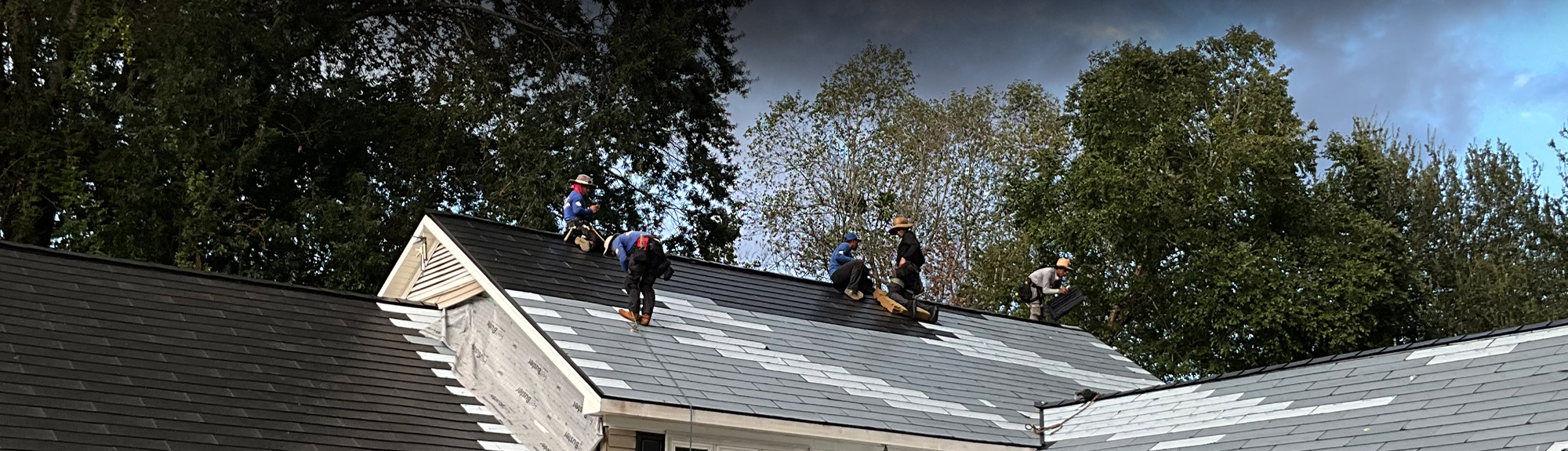
TimberSteel Installation
Looking for a roofing contractor who knows how to handle your TimberSteel™ metal roof installation? Look no further than Brazen Roofing – a certified GAF Metal Roofing Contractor trained to install the TimberSteel™ system the right way.
Metal roofing has been around for decades, but GAF took things to a new level with TimberSteel™. This innovative design combines the strength of steel with the ease of asphalt shingle installation, creating a system that’s durable, stylish, and efficient all at once.
Traditional metal panels can be complicated to work with. They require specialty tools, custom fabrication, and often take longer to install. TimberSteel™ changes that. Each shingle is designed to install with the same tools used for standard asphalt roofs, which means a faster, cleaner, and more straightforward process.
Underneath the surface, the system is just as smart. A vented attic ridge cap and integrated underlayment help regulate temperature and improve energy efficiency year-round. The result is a metal roof that performs as good as it looks, strong, weather-tight, and built to last.
Every TimberSteel™ roof we install is inspected from start to finish to make sure it meets GAF’s standards and our own. You’ll end up with a roof that’s tough enough to handle extreme conditions, yet designed to complement your home beautifully.
When you choose Brazen Roofing for your TimberSteel™ installation, you’re getting a certified team that understands the product, the process, and what it takes to get it done right.
Every installation is backed by our TimberSteel Guarantee. Learn more about the full GAF TimberSteel system.
What Makes the Installation Different
The reason TimberSteel matters to a contractor is that it removes the parts of metal roofing that go wrong. Traditional standing seam needs on-site fabrication, seaming equipment and a crew that does nothing else. TimberSteel installs shingle-style, with standard tools, which means the crew already doing quality shingle work can do quality metal work.
That does not make it forgiving. The details still decide the outcome:
- Fastener placement. Metal moves with temperature. Fasteners set wrong restrict that movement and the panel telegraphs it or works loose.
- The vented ridge cap. It is part of the system, not an accessory, and it only works if the intake side of the attic is adequate.
- Integrated underlayment. Specified as part of the assembly. Substituting a cheaper underlayment underneath a premium metal roof is a false economy that shows up in ten years, not ten days.
- Valleys, sidewalls and penetrations. Metal-to-metal and metal-to-masonry transitions are unforgiving of improvisation.
- Dissimilar metals. Contact between the wrong two metals corrodes. Coastal salt air accelerates it considerably.
Why Attic Ventilation Is Part of a Metal Roof
The vented ridge cap in the TimberSteel system is an exhaust. Exhaust without matching intake at the soffit does not move air: it just pulls conditioned air out of the house. We check the intake side before we install the exhaust side, and if the intake is short we fix it during the installation, when access is open and the cost is a fraction of what it becomes later.
Our article on why proper roof ventilation matters explains the mechanics, and roof ventilation in South Carolina covers what it means in a humid coastal climate specifically.
How TimberSteel Performs by Market
- Coastal South Carolina and Georgia: Myrtle Beach, Charleston and Savannah. Wind performance is the draw. Fastener corrosion is the risk, so coastal installations get the right fastener and flashing metallurgy rather than whatever is on the truck.
- Denver, Parker and Oklahoma City: hail country. Metal dents where asphalt cracks, and a dented metal roof is usually still a watertight roof. That distinction matters more than it sounds. Insurers treat cosmetic denting differently from functional damage, so ask your carrier how your policy reads before you assume either way.
- Jacksonville, Florida: sun and heat. A reflective metal roof runs cooler than asphalt through a Florida summer, and the substrate does not dry out the way asphalt does.
- Springfield and Raleigh: mixed exposure with real freeze-thaw cycling, where metal’s ability to shed snow and ice is an underrated advantage.
TimberSteel vs. Standing Seam vs. Architectural Shingles
Three honest comparisons, since most homeowners looking at this page are still choosing:
- Against standing seam: TimberSteel gets you a metal roof with a shake-like appearance and a much wider pool of qualified installers. True standing seam metal remains the choice where a clean modern line is the goal or on low slopes.
- Against architectural shingles: TimberSteel costs more and lasts considerably longer. Compare directly with architectural and designer shingles before deciding, and think in cost per year rather than cost.
- Against tile or slate: a fraction of the weight, which matters because tile and slate often need structural reinforcement that metal does not.
Certification and Warranty
We are a GAF-certified contractor, which is what allows us to install the TimberSteel system to specification and register the manufacturer coverage that goes with it. Certification is not decorative here: manufacturer warranty tiers on metal systems are generally conditional on who installed it and how.
Our overview of GAF roofing warranties explains how the tiers differ and what each one covers. Register the coverage, unregistered warranties are the most common avoidable loss in residential roofing.
If you want a real number for your own roof, book a free roof inspection. Metal is part of our residential roofing line, and financing is available.
Frequently Asked Questions
A metal roofing system that combines the strength of steel with the installation method of an asphalt shingle. Each shingle installs with the same tools used on a standard asphalt roof, and the system includes a vented attic ridge cap and integrated underlayment.
Yes, meaningfully so. Traditional metal panels require specialty tools, custom fabrication and longer install times. TimberSteel installs shingle-style, which makes the process faster and cleaner: though fastener placement, ventilation and flashing details still determine whether the roof performs.
You need one to get the full manufacturer coverage. Brazen Roofing is a certified GAF Metal Roofing Contractor trained on the TimberSteel system, and every roof we install is inspected start to finish against GAF standards and our own.
Generally yes. Metal dents where asphalt cracks, and a dented metal roof is usually still watertight, which is a very different outcome from a compromised shingle roof. How your insurer treats cosmetic denting varies by policy, so ask before you buy.
No, the opposite. A reflective metal roof runs cooler than asphalt in direct sun, and the TimberSteel vented ridge cap plus integrated underlayment help regulate attic temperature year-round. The one condition is adequate soffit intake, exhaust without intake does not move air.
It costs more up front and lasts considerably longer, so the comparison worth making is cost per year of service life rather than cost of installation. If you plan to own the home for a long time, that math usually favors metal.