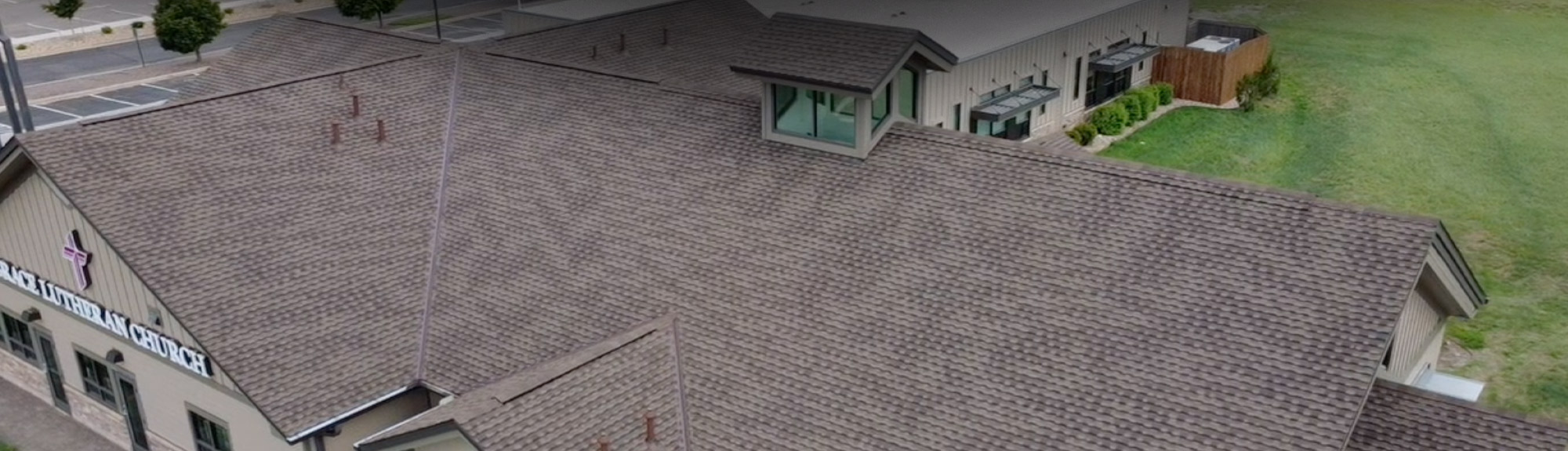
Impact-Resistant Shingles
Class 4 impact-resistant shingles are one of the smartest investments a Denver homeowner can make. They’re rated to withstand hail impact without cracking or losing granules. They hold up to Colorado’s severe storm seasons far better than standard shingles, and many insurers offer premium discounts for installing them.
We’ll walk you through Class 4 shingle options and manufacturers. We’ll explain how the impact rating works and give you a clear estimate before installation begins. Many homeowners choose to upgrade to Class 4 shingles during a hail-damage replacement, using insurance proceeds to cover the cost.
We’ve installed impact-resistant roofing across the Denver area for years. That experience tells us which products perform best against Colorado hail and hold up over the long run.
- Free consultation on Class 4 impact-resistant shingle options
- Potential insurance premium discounts after installation
- Installed by crews experienced with Denver’s hail-prone climate
Ready to upgrade to impact-resistant shingles? Contact Brazen Roofing for a free Denver estimate. This is part of our full Residential Roofing service line. If you’ve already had a storm hit, see our Hail Damage Specialists page for Denver-specific repair guidance. You can also browse our Denver project gallery to see finished installs.
What the Class 4 Rating Actually Measures
Impact resistance is graded Class 1 through Class 4, and Class 4 is the highest rating available for roofing materials. The test is deliberately blunt: a two-inch steel ball is dropped onto the shingle from twenty feet, twice in the same spot, and the shingle passes only if the mat does not crack.
Two things follow from that, and both are worth knowing before you spend the money.
- It is a laboratory test, not a hail forecast. A steel ball is not hail. Real hail arrives at an angle, at varying speeds, in varying densities, sometimes accompanied by 70 mph wind. Class 4 is the best available proxy for impact performance and it is not a guarantee against damage.
- It measures cracking, not appearance. A Class 4 shingle can be dented, bruised or scuffed by hail and still pass every functional test. That distinction is the entire subject of the insurance section below.
Class 4 shingles get there in different ways depending on the product: some are a thicker, heavier laminate, some use a polymer-modified asphalt that flexes rather than fractures, and some use a reinforcing mesh on the back. Those are not equivalent in the field, and the polymer-modified products generally hold up best in our experience.
The Insurance Discount, Honestly
Colorado carriers commonly offer a premium credit for Class 4 roofing, and in a hail market like the Front Range it can be a meaningful annual number. But it varies a great deal by carrier and by policy, and we cannot tell you what yours will be.
What to do: call your agent before the roof is installed and ask three specific questions. What is the credit as a percentage or dollar figure? What documentation do you need, usually the manufacturer’s Class 4 certification and the installation invoice? And does the policy carry a cosmetic damage exclusion or a separate wind-and-hail deductible?
That third question is the one people skip and later regret. A growing number of Colorado policies exclude cosmetic hail damage, and some carry a wind-and-hail deductible calculated as a percentage of dwelling coverage rather than a flat amount. The practical effect is that a Class 4 roof can lower your premium and, at the same time, make a future claim harder, because a dented-but-functional Class 4 shingle is exactly the scenario a cosmetic exclusion is written for. That is not a reason to skip the upgrade. It is a reason to know what you are buying. We do not adjust claims and we will not interpret your policy, ask your agent, in writing.
Upgrading During a Hail Claim
This is the most economical way into a Class 4 roof and it is what many Denver and Parker homeowners do. When a hail claim funds a replacement, the insurer covers the roof you had. If you want to upgrade to Class 4, you generally pay the difference in material cost between the two, not the cost of the whole roof.
It is the one moment the upgrade is cheap, and the moment you are most likely to be persuaded of its value. If a storm has already come through, start at our Denver hail damage page or storm restoration, and get the damage documented before you make the material decision.
When Class 4 Is Not the Right Spend
We would rather tell you this than sell you a roof you do not need.
- If you are selling within a couple of years. The premium is unlikely to come back at closing, and the insurance credit accrues to the next owner.
- If your carrier offers no meaningful credit. Then it is a durability purchase, not a financial one. Still defensible, just be clear which decision you are making.
- If the roof is not being replaced anyway. Tearing off a sound roof to upgrade the impact rating rarely pencils out.
- If metal makes more sense. On some houses it does. Metal dents rather than cracks, lasts two to three times as long, and carries its own Class 4 ratings. Compare metal roofs and GAF TimberSteel, which has no maximum wind speed limitation and Class 4 impact resistance.
The Installation Still Decides It
A Class 4 shingle installed badly is a Class 4 shingle that fails early. The rating covers the product, not the roof.
- Nail placement and count. Nails above the nailing zone hold the shingle by the tab only, and it voids most manufacturer warranties. It is the most common defect in the industry.
- Matched starter strip and ridge cap. Usually a condition of the full warranty, and cut-up three-tab used as starter is not the same thing.
- Synthetic underlayment, and ice-and-water membrane where the Front Range freeze-thaw cycle warrants it.
- Balanced ventilation. Exhaust matched by soffit intake. Without it the shingles cook from underneath and you lose years off a premium roof. See why proper roof ventilation matters.
- Flashing replaced, not reused, at every wall, chimney and valley.
Every Brazen roof is signed off by our own quality-control inspector rather than by the crew that installed it. Keep the manufacturer’s Class 4 certification and the invoice together: your insurer will want both, and unregistered warranty coverage is the most common avoidable loss in residential roofing.
This is part of our full Residential Roofing service line. More about Brazen in Colorado on our Denver and Parker roofing page, and see architectural and designer shingles for how Class 4 designer products compare to standard architectural. Financing is available if the upgrade is a budget question.
Frequently Asked Questions
Class 4 is the highest impact rating available for roofing materials. It is earned by surviving a steel ball dropped from twenty feet twice in the same spot without the shingle mat cracking. Products reach it different ways (thicker laminates, polymer-modified asphalt, or a reinforcing mesh) and those do not all perform identically in real hail.
Many Colorado carriers offer a credit, and in a hail market it can be meaningful. The amount varies substantially by carrier and policy, so call your agent before installation and ask for the specific figure and the documentation they require, usually the manufacturer’s Class 4 certification and the installation invoice.
No. The rating measures resistance to cracking under a laboratory impact test, not immunity. Real hail arrives at angles, at varying speeds, often with high wind. A Class 4 shingle can still be dented or bruised, it is simply far less likely to crack through, which is what causes leaks.
Yes, and it is the most economical time to do it. The insurer covers the roof you had, and you typically pay only the material cost difference to upgrade rather than the cost of the whole roof. Get the damage documented first, then make the material decision.
It is a policy clause excluding hail damage that marks the roof without compromising its function. It matters specifically with Class 4 shingles, because a dented-but-functional shingle is exactly what the clause is written for. Ask your agent whether your policy carries one, and whether you have a separate percentage-based wind-and-hail deductible.
Sometimes. Metal dents rather than cracks, lasts two to three times as long as asphalt, and carries its own Class 4 ratings. It costs more up front. If you plan to own the home for decades it often makes better sense; if not, Class 4 shingles usually do.