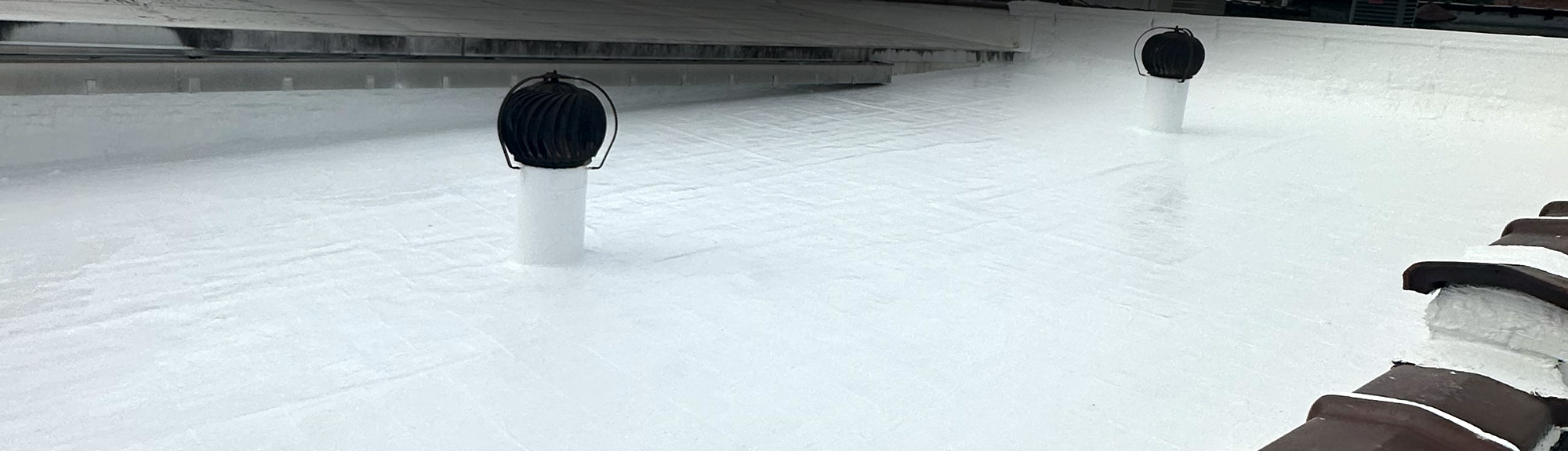
Commercial Flat Roof Repair
Looking for flat roof repair Denver property owners can trust? Denver’s flat and low-slope commercial roofs take a beating from hail, heavy snow loads, and rapid temperature swings. As a result, a damaged membrane or seam that goes unrepaired can lead to leaks and insulation damage fast. Catching problems early is the best way to protect your building.
Signs Your Flat Roof Needs Repair
How do you know it’s time to call? Look for ponding water that doesn’t drain within 48 hours, or bubbling and cracking in the membrane. Stains spreading across your ceiling tiles are another red flag. Also watch for a spike in your energy bills, since a compromised roof lets conditioned air escape. Catching these signs early usually means a repair, not a full replacement.
Our Repair Process
We inspect your commercial roof system for hail damage, ponding water, and worn seams first. Then we repair it with materials built to handle Denver’s freeze-thaw cycles and intense hailstorms. Once repairs are complete, many owners enroll in our preventative maintenance program. That way, we catch the next issue before it becomes a bigger one.
Local Experience You Can Rely On
We’ve repaired commercial flat roofs across the Denver area for years. In particular, that experience tells us which systems hold up best against Colorado’s weather extremes. That’s why flat roof repair Denver businesses trust starts with us, not a generic quick fix. Every repair also comes with a clear written scope, so you know exactly what you’re paying for before we start.
- Free commercial roof inspection and repair estimate
- Hail, seam, and membrane damage assessed before repairs begin
- Materials built for Denver’s freeze-thaw cycles and hail
- Preventative maintenance available to protect your investment long-term
Need commercial flat roof repair? Contact Brazen Roofing today for a free, no-obligation Denver estimate. This is part of our full Commercial Roofing service line. If a storm caused the damage, see our Hail Damage Specialists page for insurance claim guidance, or browse our Denver project gallery.
Why Front Range Flat Roofs Fail Differently
Denver and Parker are not a wet climate, and that misleads people about roofs. The damage here is mechanical and thermal rather than driven by rainfall volume, and it comes from four directions.
- Hail. The Front Range sits in one of the most hail-prone corridors in the country. On a flat roof hail does not tear the membrane so much as bruise it: fracturing the coating, crushing the insulation underneath in a pattern of small circles, and leaving a roof that looks intact and has lost its strength.
- Freeze-thaw cycling. Denver can swing across freezing and back within a single day, dozens of times a season. Every cycle expands and contracts the membrane, works fasteners loose, and opens micro-cracks at seams and terminations. This is the quiet killer of flat roofs here.
- Snow load and ice damming at parapets. Snow drifts against parapet walls and mechanical screens, sits there, melts from the building’s heat and refreezes. Water that backs up behind an ice dam goes sideways under laps and through terminations.
- Altitude and UV. At a mile up, UV exposure is meaningfully more intense than at sea level. Membranes and coatings age faster in the sun here than the climate’s reputation suggests.
Hail Damage: What It Looks Like and Why It Matters
Hail damage on a flat roof is genuinely hard to assess and it is where most disputes happen, so it is worth knowing what is actually being looked for.
- Fractured coating or surfacing on modified bitumen and built-up roofs, visible as bruising rather than holes.
- Crushed insulation under an intact membrane. The membrane still keeps water out; the R-value is gone and the substrate no longer supports the membrane properly.
- Punctures at fastener plates, where the membrane is stretched over a hard point.
- Damaged rooftop equipment: condenser fins, vent caps and mechanical housings are often the clearest evidence a storm actually hit your building.
- Split seams where the impact landed on an already stressed lap.
We assess it with a walk plus an infrared moisture survey and core samples where warranted, because crushed insulation and hidden moisture are the parts a photograph misses. Documented properly and assessed early, hail damage is a very different conversation with a carrier than the same damage found next spring.
The Insurance Side in Colorado
Two things worth knowing before you need them. Many Colorado commercial policies carry a separate wind-and-hail deductible, often calculated as a percentage of the insured value rather than a flat figure, which is frequently a much larger number than owners expect. And policies increasingly distinguish cosmetic damage from functional damage, sometimes with a cosmetic damage exclusion attached.
That second one is why documentation matters so much on a flat roof. Crushed insulation under an intact membrane is functional damage, not cosmetic, and demonstrating it requires cores and thermal imaging rather than photographs of the surface. We document what we find and give you the written record. We do not adjust claims and we will not tell you what your policy covers: read it, or have your agent walk you through those two clauses.
Also: storm chasers arrive in the Denver metro within days of a hailstorm. Verify a local office you can visit, check licensing and insurance yourself, refuse large upfront deposits, and never sign a contract with no price or one that assigns your insurance benefits to the contractor. Anyone offering to cover your deductible is a red flag, not a bargain.
Repair, Restore or Replace
- Repair when the membrane is sound and the damage is isolated, split seams, punctures at fastener plates, a failed curb flashing, worn terminations. Most of what we do.
- Restore or coat when the membrane is aging but intact and the insulation is dry. Roughly half the cost of replacement with no tear-off. Silicone handles ponding well; polyurethane is the most impact-tolerant, which matters here. See roof coatings and liquid-applied roofing.
- Replace when hail has crushed the insulation across a meaningful share of the roof, the membrane is failing broadly, or two roofs are already in place. See commercial roof replacement.
On a replacement in this market, EPDM is worth serious consideration: it stays flexible through freeze-thaw, absorbs impact rather than splitting, and is easy to repair in cold weather. TPO and PVC both work here too, PVC specifically wherever grease or chemical exhaust reaches the roof. Compare them on our commercial roofing systems page.
Winter Work, and Why Timing Matters
Some flat roof work simply cannot be done properly below certain temperatures: adhesives will not cure, some membranes will not weld reliably, and coatings need a cure window. That is a physical constraint, not a scheduling preference, and a contractor who tells you otherwise in January is telling you something about their standards.
What we can do in winter is emergency repair and temporary dry-in to stop a building taking damage, then complete the permanent work when conditions allow. What we would rather do is inspect in the fall so nothing becomes an emergency in February. Our preventative maintenance program schedules exactly that.
Keeping It Working
Front Range flat roofs reward maintenance more than almost anywhere. Clear drains before snow, check parapet terminations and mechanical screens where snow drifts, and get the roof looked at after every significant hail event even when it looks fine. See how often a commercial roof should be inspected, what to expect during a commercial roof inspection and why roof maintenance is essential for your business.
More about Brazen in Colorado on our Denver and Parker roofing page. For storm work start at storm restoration. See also commercial repairs, our commercial roof work and the full commercial roofing line.
Frequently Asked Questions
Often you cannot tell from the surface, which is the problem. Hail bruises a flat roof rather than tearing it, fracturing surfacing and crushing the insulation underneath while the membrane still looks intact. Damaged condenser fins and vent caps are usually the clearest visible evidence. Confirming it takes an infrared survey and core samples.
It depends on how much of the insulation is crushed and how much moisture got in. Isolated punctures and split seams on an otherwise sound roof are repairs. Widespread crushed insulation is a replacement, because the R-value is permanently gone and the membrane no longer has proper support underneath.
That depends on your policy, and two clauses matter most in Colorado: a separate wind-and-hail deductible often calculated as a percentage of insured value, and a possible cosmetic damage exclusion. Crushed insulation under an intact membrane is functional damage rather than cosmetic: but proving that requires cores and thermal imaging, not surface photographs.
Because of freeze-thaw. Water that sits in a low spot freezes, expands, thaws and refreezes, working seams and terminations open in a way that steady rainfall never would. Water that does not drain within 48 hours is a problem here even though Denver is dry.
Emergency repairs and temporary dry-in, yes: and we do them, because a building taking water cannot wait. Permanent work involving adhesives, welded seams or coatings needs temperatures above certain thresholds to cure or bond properly. Anyone promising a full permanent repair in deep cold is cutting a corner.
EPDM is a strong choice here: it stays flexible through freeze-thaw, absorbs hail impact rather than splitting, and is easy to repair in cold weather. TPO and PVC both perform well too, with PVC required wherever grease or chemical exhaust reaches the roof.