The Insurance Guide
Filing an insurance claim for storm damage can feel just as stressful as the storm itself. This guide breaks down what to expect, step by step. You will know exactly what is coming, and how Brazen Roofing helps you through every part of it.
One thing to understand up front: the rules are not the same everywhere. The deadline that governs your claim in Jacksonville is nothing like the one that governs a claim in Milwaukee. We have set out the state-by-state differences below, with the actual statutes, because this is the part homeowners most often get wrong.
The seven steps of a storm claim
Nearly every claim, in every market we serve, follows the same arc.
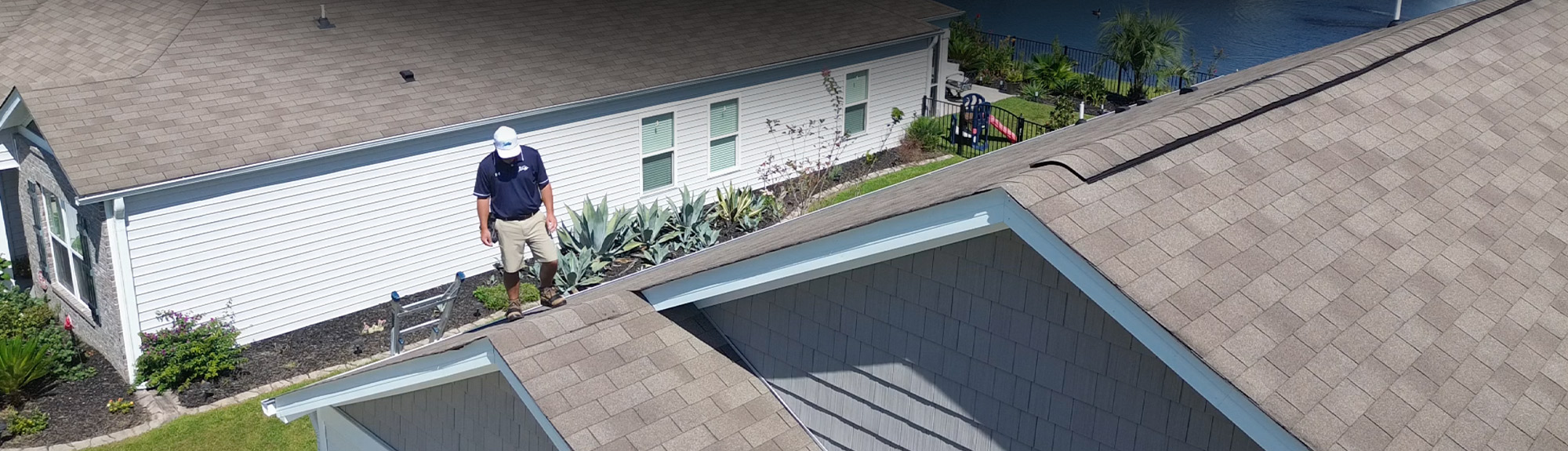
- 1. Inspection and documentation. A full roof inspection with photographs of every point of damage. Wind, hail, or a fallen limb: we document it all, and we do it before you file.
- 2. Notice of loss. You report the claim to your carrier. This starts most of the clocks. Note the date.
- 3. Adjuster inspection. Your carrier sends an adjuster. We meet them on the roof whenever we can.
- 4. Proof of loss. The formal, sworn statement of what you are claiming. In several states this, not the phone call, is the document that starts the insurer’s legal deadline.
- 5. Scope and settlement. The carrier issues an estimate and, usually, a first check for actual cash value.
- 6. Repair, and supplements. We build the roof. Anything the original scope missed gets submitted as a supplement with photographs and code citations.
- 7. Depreciation release. Final invoice goes to the carrier and the withheld depreciation is released.
We have worked with every major insurance carrier. We know the language adjusters use, and we know what most policies cover. Sometimes your roof needs attention before your claim wraps up. In that case, our emergency repair team can tarp and stabilize it right away.
Why the first check is smaller than the estimate
This is the single most common source of panic, and it is almost never a problem. Most policies settle roofs on a replacement cost value basis but pay in two parts.
The first payment is actual cash value: the replacement cost, minus depreciation for the age and condition of the roof, minus your deductible. The withheld amount is called recoverable depreciation. Once the work is finished and invoiced, you submit for it and the carrier releases the balance. On a $28,000 roof with a $2,000 deductible and $9,000 of depreciation, the first check is $17,000 and the second is $9,000.
The trap is a policy written on an actual cash value basis with no recoverable depreciation, common on older roofs and increasingly common as a cost-saving endorsement. There is no second check. If that is your policy, you need to know before you sign a contract, not after. We check the declarations page with you.
Deadlines: know the one that applies to you
Every state we work in handles claim timing differently, and in most of them the policy itself is stricter than the statute.
- Florida. Notice of a new or reopened property claim must be given within one year of the date of loss, and a supplemental claim within 18 months (Fla. Stat. § 627.70132). For a hurricane, the date of loss is the date of landfall; for a tornado, windstorm or severe rain event, the date verified by NOAA.
- Oklahoma. The deadlines run against your insurer. Once it receives your proof of loss, it must issue a written offer of settlement or rejection within 90 days (36 O.S. § 3629), and complete its investigation within 60 days, capped at 120 (36 O.S. § 1250.7).
- Ohio. No state roofing license, and the courts enforce short policy deadlines. In Dominish v. Nationwide (2011) the Ohio Supreme Court upheld a one-year limitation-of-action clause in a homeowners policy.
- Wisconsin. Policies may require suit within 12 months of the loss (Wis. Admin. Code Ins. 6.76). Many carriers extend to 24, but you cannot assume it.
- Kansas. The statute allows five years on a written contract (K.S.A. 60-511), but Pfeifer v. Federal Express (2013) confirmed that a policy may contractually shorten that, and most cut it to 12 months. The statute is not your deadline; the policy is.
- Colorado. Under C.R.S. § 6-22-103, a residential roofing contract must let you rescind and recover your full deposit within 72 hours, and the contractor must hold your payment in trust until materials are delivered or most of the work is done.
If you take one thing from this section: read the limitation-of-action clause in your own policy. It is usually one sentence, it usually says twelve months, and it overrides whatever you have read about your state’s general statute of limitations.
No contractor may pay your deductible, and it is not a technicality
Colorado, Oklahoma and a growing list of other states expressly prohibit a roofing contractor from paying, waiving, rebating or promising to rebate any part of your insurance deductible. Colorado writes it into the required contract terms (C.R.S. § 6-22-103). Oklahoma goes further: under 59 O.S. § 1151.30, if a contractor makes that offer, your insurer is not obligated to consider that contractor’s estimate at all.
So the pitch is not free money. It is a documented reason for your carrier to discard the paperwork your claim is built on, and it is your claim that stalls. We quote your deductible, we collect it, and it appears in writing on the contract.
Supplements are normal, not a fight
An initial adjuster scope is written quickly, often from limited access, and it routinely omits items that the building code requires once the roof comes off. Ice and water barrier at eaves and valleys, drip edge, ventilation to current code, a second layer discovered at tear-off, deteriorated decking, or steep-and-high access charges.
None of that is an argument. It is a supplement: a written request with photographs and the applicable code section, submitted under the same claim number. Approved supplements are paid by the carrier and do not increase your deductible. A contractor who tells you the scope is the scope and asks you to cover the difference in cash is not doing supplements.
What we bring to your claim
- Free, insurance-ready inspection with full photo documentation
- We meet with your adjuster on-site and personally double-check every detail
- Decades of experience working claims with every major insurance carrier
- Supplements submitted with code citations, not phone arguments
- Your deductible quoted honestly and collected in writing, as the law in several of our states requires
- Emergency tarping and stabilization while the claim is still open
Claims help in your market
The process is the same everywhere; the law is not. Each of these pages covers the specifics where you live.
- Oklahoma City, storm restoration and insurance claims, plus hail and wind damage
- Denver, hail damage specialists and impact-resistant shingles
- Springfield, MO, roof insurance claims
- Wichita, KS, roof insurance claims
- 1. Inspection and documentation. A full roof inspection with photographs of every point of damage. Wind, hail, or a fallen limb: we document it all, and we do it before you file.
- 2. Notice of loss. You report the claim to your carrier. This starts most of the clocks. Note the date.
- 3. Adjuster inspection. Your carrier sends an adjuster. We meet them on the roof whenever we can.
- 4. Proof of loss. The formal, sworn statement of what you are claiming. In several states this, not the phone call, is the document that starts the insurer’s legal deadline.
- 5. Scope and settlement. The carrier issues an estimate and, usually, a first check for actual cash value.
- 6. Repair, and supplements. We build the roof. Anything the original scope missed gets submitted as a supplement with photographs and code citations.
- 7. Depreciation release. Final invoice goes to the carrier and the withheld depreciation is released.
We have worked with every major insurance carrier. We know the language adjusters use, and we know what most policies cover. Sometimes your roof needs attention before your claim wraps up. In that case, our emergency repair team can tarp and stabilize it right away.
Why the first check is smaller than the estimate
This is the single most common source of panic, and it is almost never a problem. Most policies settle roofs on a replacement cost value basis but pay in two parts.
The first payment is actual cash value: the replacement cost, minus depreciation for the age and condition of the roof, minus your deductible. The withheld amount is called recoverable depreciation. Once the work is finished and invoiced, you submit for it and the carrier releases the balance. On a $28,000 roof with a $2,000 deductible and $9,000 of depreciation, the first check is $17,000 and the second is $9,000.
The trap is a policy written on an actual cash value basis with no recoverable depreciation, common on older roofs and increasingly common as a cost-saving endorsement. There is no second check. If that is your policy, you need to know before you sign a contract, not after. We check the declarations page with you.
Deadlines: know the one that applies to you
Every state we work in handles claim timing differently, and in most of them the policy itself is stricter than the statute.
- Florida. Notice of a new or reopened property claim must be given within one year of the date of loss, and a supplemental claim within 18 months (Fla. Stat. § 627.70132). For a hurricane, the date of loss is the date of landfall; for a tornado, windstorm or severe rain event, the date verified by NOAA.
- Oklahoma. The deadlines run against your insurer. Once it receives your proof of loss, it must issue a written offer of settlement or rejection within 90 days (36 O.S. § 3629), and complete its investigation within 60 days, capped at 120 (36 O.S. § 1250.7).
- Ohio. No state roofing license, and the courts enforce short policy deadlines. In Dominish v. Nationwide (2011) the Ohio Supreme Court upheld a one-year limitation-of-action clause in a homeowners policy.
- Wisconsin. Policies may require suit within 12 months of the loss (Wis. Admin. Code Ins. 6.76). Many carriers extend to 24, but you cannot assume it.
- Kansas. The statute allows five years on a written contract (K.S.A. 60-511), but Pfeifer v. Federal Express (2013) confirmed that a policy may contractually shorten that, and most cut it to 12 months. The statute is not your deadline; the policy is.
- Colorado. Under C.R.S. § 6-22-103, a residential roofing contract must let you rescind and recover your full deposit within 72 hours, and the contractor must hold your payment in trust until materials are delivered or most of the work is done.
If you take one thing from this section: read the limitation-of-action clause in your own policy. It is usually one sentence, it usually says twelve months, and it overrides whatever you have read about your state’s general statute of limitations.
No contractor may pay your deductible, and it is not a technicality
Colorado, Oklahoma and a growing list of other states expressly prohibit a roofing contractor from paying, waiving, rebating or promising to rebate any part of your insurance deductible. Colorado writes it into the required contract terms (C.R.S. § 6-22-103). Oklahoma goes further: under 59 O.S. § 1151.30, if a contractor makes that offer, your insurer is not obligated to consider that contractor’s estimate at all.
So the pitch is not free money. It is a documented reason for your carrier to discard the paperwork your claim is built on, and it is your claim that stalls. We quote your deductible, we collect it, and it appears in writing on the contract.
Supplements are normal, not a fight
An initial adjuster scope is written quickly, often from limited access, and it routinely omits items that the building code requires once the roof comes off. Ice and water barrier at eaves and valleys, drip edge, ventilation to current code, a second layer discovered at tear-off, deteriorated decking, or steep-and-high access charges.
None of that is an argument. It is a supplement: a written request with photographs and the applicable code section, submitted under the same claim number. Approved supplements are paid by the carrier and do not increase your deductible. A contractor who tells you the scope is the scope and asks you to cover the difference in cash is not doing supplements.
What we bring to your claim
- Free, insurance-ready inspection with full photo documentation
- We meet with your adjuster on-site and personally double-check every detail
- Decades of experience working claims with every major insurance carrier
- Supplements submitted with code citations, not phone arguments
- Your deductible quoted honestly and collected in writing, as the law in several of our states requires
- Emergency tarping and stabilization while the claim is still open
Claims help in your market
The process is the same everywhere; the law is not. Each of these pages covers the specifics where you live.
- Oklahoma City, storm restoration and insurance claims, plus hail and wind damage
- Denver, hail damage specialists and impact-resistant shingles
- Springfield, MO, roof insurance claims
- Knoxville, TN, roof insurance claims
- Columbus, OH, roof insurance claims
- Milwaukee, WI, roof insurance claims
- Coastal markets, emergency hurricane roof inspections, covering Myrtle Beach, Charleston, Savannah, Jacksonville and Raleigh
Not sure where to start with your claim? Contact Brazen Roofing today and we will walk you through it. Learn more about our full Storm Restoration services.
It depends on your state and, more importantly, on your policy. Florida requires notice within one year of the date of loss and 18 months for a supplemental claim. Wisconsin policies may require suit within 12 months. Kansas allows five years by statute but courts permit policies to shorten that, and most do. In every state, read the limitation-of-action clause in your own policy; it usually overrides the general statute.
Because most policies pay in two parts. The first check is actual cash value: replacement cost minus depreciation minus your deductible. The withheld portion, recoverable depreciation, is released after the work is completed and invoiced. The exception is a policy written on an actual cash value basis with no recoverable depreciation, where there is no second check. Check your declarations page before you sign anything.
No. Colorado prohibits it in the required contract terms under C.R.S. 6-22-103, and Oklahoma prohibits it under 59 O.S. 1151.30 with a consequence that falls on you: your insurer is not obligated to consider the estimate of a contractor who made that offer. A roofer offering to eat your deductible is putting your claim at risk, not saving you money.
A supplement is a written request to add items the adjuster original scope missed, such as code-required ice and water barrier, drip edge, ventilation upgrades, a hidden second layer, or rotted decking found at tear-off. It is submitted with photographs and the applicable code citation under the same claim number. The carrier pays approved supplements, and they do not increase your deductible.
Not necessarily. A claim that comes in at or below your deductible pays nothing and still records a loss on your history, which affects renewal pricing and, in hail-heavy markets, whether a carrier will keep writing you at all. We will tell you honestly whether the damage is likely to exceed your deductible before you file.
No. You choose your own contractor. Carriers often maintain preferred vendor programs, but you are not obliged to use one, and the carrier owes the same covered scope either way. What matters is that whoever you hire is properly registered or licensed in your state and carries the required liability and workers compensation coverage.