Roof Insurance Claim Help
Getting roof insurance claims Springfield homeowners file paid correctly starts with documentation. Brazen Roofing helps you document storm damage, file the claim, and see it through to payment. We inspect for free, provide the photo evidence your carrier requires, and meet your adjuster on the roof. You deal with your insurer; we handle the roofing side.
How a Missouri Roof Claim Actually Works
- Get inspected and documented first. Call your carrier with evidence in hand, not a hunch, since a dated photo package makes the whole process shorter.
- File the claim. Most Missouri homeowner policies allow one year from the date of loss, but your policy is what controls, so read it or ask your agent.
- Meet the adjuster. Your carrier sends someone to assess the damage, and we’ll be there.
- Review the scope and estimate. The adjuster’s written scope determines the payout, so if it misses damage, that’s the moment to say so.
- Approval and first payment. Most carriers pay the actual cash value up front and the recoverable depreciation after the work finishes.
- We build the roof, then close out the claim. We provide the final invoice and documentation your carrier needs to release the remaining funds.
What Your Deductible Actually Means
Your deductible is your share of the job. If your carrier approves your roof replacement at $18,000 and your deductible is $2,500, your carrier pays $15,500, and you pay $2,500. Some Missouri policies use a percentage-of-dwelling-value wind and hail deductible rather than a flat dollar figure. That can run considerably higher than people expect, so check your declarations page before you assume.
What We Do on Adjuster Day
We walk the roof with your adjuster, point out what we found, and provide our measurements and photographs. We’re not there to argue; we’re there to make sure nothing slips through. When a genuine disagreement about scope comes up, we document it in writing so you have something to work with.
If your carrier and your contractor cannot agree on the numbers, most policies contain an appraisal clause that allows an independent third party to settle it. Most homeowners have never heard of it, but it’s worth knowing it’s there.
What We Will Not Do
We will not waive, discount, absorb, or work around your deductible. In Missouri, that’s insurance fraud. Any contractor who offers it is telling you something important about how they run a business.
We also won’t call a roof totaled when it isn’t. Sometimes the honest answer is a repair.
Need help getting roof insurance claims Springfield residents count on moving forward? Contact Brazen Roofing for a free inspection. Related: Hail & Wind Damage Repair · Impact-Resistant Shingles · Service Area. For general guidance on any claim, see our sitewide Insurance Guide and Storm Restoration pages.
Where We Stop, Stated Up Front
We document the condition of your roof thoroughly, and we can be present when the adjuster inspects it. We know what adjusters look for and we make sure nothing gets missed.
We are not public adjusters. We do not negotiate your claim, we do not represent you against your carrier, and we will not tell you what your policy covers. Any roofer who offers to handle your claim for you is offering something outside their lane. Read your policy, or ask your agent.
Two Clauses That Decide Your Settlement
- Replacement cost or actual cash value on the roof. The single most consequential line in a Missouri homeowners policy. Actual cash value depreciates the roof by its age before paying, so on a fifteen-year-old roof the check can be a fraction of what a replacement costs. In hail-exposed markets particularly, carriers have moved older roofs to actual cash value at renewal, often without the homeowner noticing.
- Your wind-and-hail deductible. Frequently separate from your standard deductible and sometimes calculated as a percentage of dwelling coverage rather than a flat figure, which can be several times what you expect.
Cosmetic damage exclusions are worth asking about too, particularly with metal roofs and Class 4 impact-resistant shingles, both dent rather than crack, which is precisely the scenario such a clause is written for.
Claim Frequency Has Consequences in the Ozarks
This matters more here than in most markets, and almost nobody says it out loud. Every claim you file is on your record. In a region hit as often as southwest Missouri, homeowners can end up facing higher deductibles at renewal, roof-specific limitations added to the policy, a shift from replacement cost to actual cash value on the roof, or non-renewal.
That is not an argument against filing a legitimate claim. It is an argument for two things: not filing marginal claims at or barely above your deductible, and building a roof that produces fewer claimable failures in the first place.
The Documentation Problem in a Repeat-Hail Market
An Ozarks roof may carry damage from several separate events. That makes attribution arguable, and an adjuster is entitled to say the condition reflects wear or a storm outside your policy period.
The fix is a dated record. An inspection report with photographs after each significant storm establishes what the roof looked like and when, exactly what is missing when a carrier calls storm damage wear. Our roof maintenance program produces that on a schedule, and in this market it is worth more than in almost any other we work in.
What We Do
- A full documented inspection. Photographs slope by slope, the interior and the attic, plus a written assessment you keep whether or not you file.
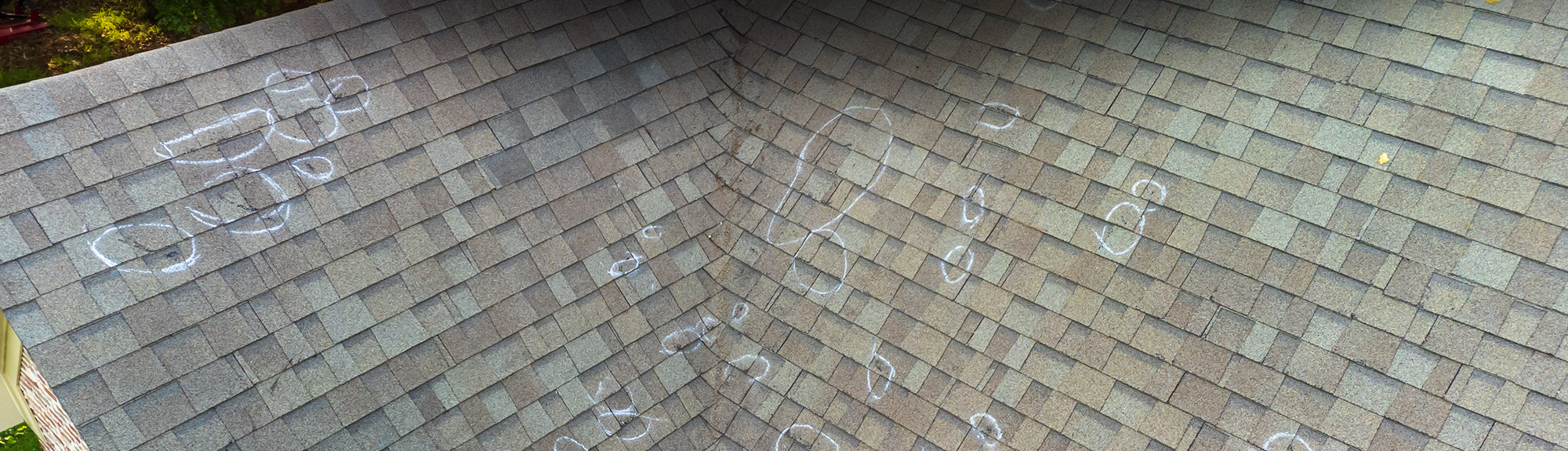
- Test squares: marked-off areas with impacts counted, in the format adjusters expect.
- Collateral damage recorded: gutters, downspouts, vent caps, condenser fins, fencing.
- Directionality documented, so the damage pattern supports the claim.
- Presence at the adjuster inspection, so what we found is what gets discussed.
- A written scope and estimate in a format your carrier can work from.
- An honest read, including when filing is not in your interest.
Verify Your Contractor First
Missouri has no state roofing license, so the credential check is local. The City of Springfield requires roofing contractors to hold a city license along with insurance and bonding: verify it through Springfield’s online business license search or by calling 417-864-1617. Surrounding municipalities set their own requirements.
Claim season brings out-of-town crews to the Ozarks quickly. Never pay a large deposit before work starts, never sign a contract with no price on it or one that assigns your insurance benefits to the contractor, and treat an offer to cover your deductible as a warning rather than a discount.
See hail and storm damage repair, our service area, the broader storm restoration service, and what to do after storm damage. Start with a free roof inspection.
Frequently Asked Questions
No, and be wary of any roofer who says they will. We document the roof condition thoroughly, provide a written scope your carrier can work from, and can be present when the adjuster inspects. We are not public adjusters, we do not negotiate the claim, and we will not interpret your policy.
Replacement cost pays what it costs to replace the roof. Actual cash value depreciates it by age first, so on an older roof the settlement can be a fraction of the replacement cost. In hail markets carriers often move older roofs to actual cash value at renewal, check your declarations page.
Often not. A claim at or barely above your deductible is rarely worth filing, and claims history in a market hit this often can bring higher deductibles at renewal, a shift to actual cash value on the roof, or non-renewal. Genuine damage that will shorten the roof’s life by years is a different calculation.
With a dated record. An inspection report and photographs after each significant storm establish what the roof looked like and when, which is exactly what is missing when a carrier attributes damage to wear or to a storm outside your policy period.
Weeks, not months. Policies require prompt notice, and in a region hit as often as the Ozarks the longer you wait the harder it becomes to attribute the damage to a specific covered event rather than to wear.
Usually. The insurer covers the roof you had, and you typically pay only the difference in material cost to improve on it. If the roof was near the end of its life anyway, a funded claim is the cheapest moment you will get to upgrade.