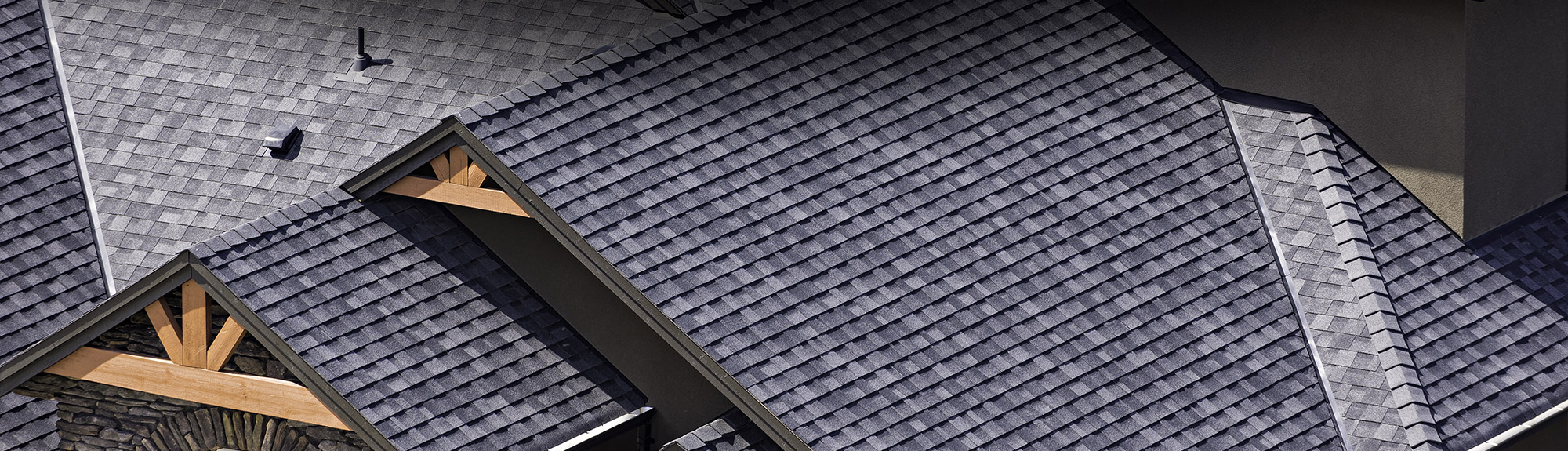
Shingles Architectural and Designer
Architectural shingles are what goes on the overwhelming majority of the roofs we build. They are the default residential roofing material in every market we serve, and for good reason: they carry real wind and impact ratings, they come in dozens of color blends, and they cost a fraction of tile or slate. Designer shingles sit one step above them: thicker, heavier, more expensive, and closer in appearance to wood shake or natural slate.
This page explains the difference between the two, what actually drives the price, which ratings matter in your climate, and the installation details that decide whether the roof reaches its rated life or fails a decade early.
Architectural Asphalt Shingles
Architectural Asphalt Shingles are the most popular residential roofing material.
Modern asphalt roofing shingles have a mat of fiberglass covered in asphalt and then covered in granules to face the weather. The layers of the composite tile work together to form a flexible, but durable and waterproof shingle.
They’re available in a wide range of styles and colors, and can even mimic the look of slate or tile. They last on average 20 years, making them a cost effective roofing solution for your home.
Architectural Asphalt Shingles are very easy for contractors to install, but it’s important to make sure they are installed properly. If installed incorrectly, shingles may fail early because water will be able to penetrate underneath from cracks or wind uplift. That’s why you should entrust your shingle roof installation to the experienced contractors at Brazen Roofing.
Designer Architectural Laminated Shingles
Commonly referred to as “luxury,” “premium” or “designer” by various shingle manufacturers, this category comprises the ultimate, top-of-the-line architectural laminated shingles.
Out of all the different types of shingles, this designer shingle category most resembles the look of genuine wood shakes or neutral slate tiles. Because this line is a natural look, it also offers the smallest range of color blends to choose from.
Designer shingles also have a class that contains not just two, but three layers laminated together for an exceptionally thick dimensional profile. With an improved degree of thickness and weight, this Class 4 Impact Resistance Rating delivers extra cushioning power against impacts. Not every designer shingle holds this classification so if it’s an important factor you’re looking for, make sure to check the specifications before making your final selection.
If you’re planning to stay in your home for many years to come, these shingles will provide superior weather resistance and a solid long-term value for the cost.
If you intend to move in a few years, you may consider choosing the more economical architectural shingles instead but either choice will boost your home’s resale value.
Architectural vs. Designer: How to Decide
Both are laminated asphalt shingles, so the decision is rarely about waterproofing. It comes down to four things:
- Impact rating. Standard architectural shingles are usually Class 3. Many designer shingles are Class 4, which is the rating insurers in hail country ask about.
- Appearance. Designer shingles have deeper shadow lines and a shake-like profile that reads as a different material from the street. Architectural shingles read as a good asphalt roof.
- Color choice. Architectural lines offer far more blends. If matching an HOA palette or a specific trim color matters, the standard line usually gives you more to work with. Our guide to choosing a shingle color walks through that decision.
- How long you are staying. Designer shingles are a long-hold investment. If a sale is likely within five years, the premium is unlikely to come back to you at closing.
If you are still deciding between asphalt and something else entirely, compare the full range on our roofing types page, or look at metal roofing and tile roofs directly.
What Actually Drives the Price
Two houses with the same square footage can come back with very different numbers. The shingle itself is rarely the biggest variable. These are:
- Roof pitch. Steeper roofs need more labor, more staging and more fall protection.
- Number of layers coming off. A tear-off of two layers costs more in labor and disposal than one.
- Deck condition. Rotten or delaminated sheathing found after tear-off has to be replaced, and it is not visible on an estimate written from the driveway.
- Penetrations and detail work. Chimneys, skylights, dormers, valleys and dead valleys all add flashing labor. So do pipe boots and kickout flashing, both of which we replace rather than reuse.
- Ventilation corrections. If the attic is short on intake, fixing it during the replacement costs a fraction of what it costs later. Our article on why roof ventilation matters explains why.
- Accessibility. Tight lots, steep driveways and limited dumpster placement all add time.
We put those variables in writing before you sign, not after. If cost is the constraint rather than the decision, we also offer roof financing.
Wind and Impact Ratings by Market
The same shingle performs differently depending on where it is installed, and the rating that matters most changes by region across the twelve markets we serve.
- Coastal South Carolina and Georgia: Myrtle Beach, Charleston and Savannah. Wind rating is the number that matters. Most architectural shingles carry a 130 mph rating when installed to the enhanced nailing pattern, and that pattern is a condition of the rating, not an upgrade. Sealed starter strip at eaves and rakes matters as much as the field shingle.
- Colorado’s Front Range: Denver and Parker. Hail is the governing threat, so Class 4 impact resistance is the question, and many carriers offer a premium discount for it. Ask your agent before you choose.
- Oklahoma City: both. High wind and severe hail in the same season, which is the strongest case for a Class 4 designer product anywhere we work.
- Inland Carolinas and Missouri: Raleigh, Springfield and Jacksonville. Mixed exposure, with wind-driven rain and occasional hail rather than a single dominant threat.
See our service area for the full list of markets, or our location pages for detail on a specific city. If a storm has already come through, start at storm restoration.
Installation Details That Decide How Long the Roof Lasts
Almost every premature shingle failure we are called to inspect traces back to installation, not to the product. The details below are where it happens, and every one of them is invisible from the ground once the roof is finished.
- Nail placement and count. Nails driven above the nailing zone hold the shingle by the tab only. It is the single most common defect we find, and it voids most manufacturer warranties.
- Underlayment choice. Synthetic underlayment, and ice-and-water membrane in valleys and at eaves where it is warranted.
- Valley construction. Open, closed-cut and woven valleys are not interchangeable, and the wrong choice for the pitch and material shortens the life of the whole plane.
- Drip edge at eaves and rakes. Inexpensive, frequently skipped, and the difference between water leaving the roof and water running behind the fascia.
- Starter strip and ridge cap. Manufacturer-matched accessories are usually required for the full warranty. Cut-up three-tab used as starter is not.
- Balanced ventilation. Exhaust without intake bakes the shingles from underneath and shortens the rated life regardless of which product you chose.
Every Brazen job is checked by our own quality-control inspector, not by the crew that installed it. That separation is the reason we can talk about these details with confidence. We are also a GAF-certified contractor, which is why we install and warranty GAF TimberSteel alongside standard GAF shingle systems.
Warranty Coverage, and What Voids It
A shingle warranty has two halves: the manufacturer covers the product, and the contractor covers the workmanship. Most homeowners assume the first one covers everything, and it does not.
Manufacturer coverage is typically prorated after an initial period and is conditional on the roof being installed to specification: correct nail placement and count, matched starter and ridge accessories, and adequate ventilation. Miss any of those and a denied claim is a real possibility. Our overview of GAF roofing warranties covers how the tiers differ.
Workmanship coverage is ours, and it is the half that actually gets used in the first decade. Ask any roofer for both in writing before you sign, and read our guide to the types of roofing shingles if you are still narrowing the field.
Ready for a real number on your own roof? Book a free roof inspection, or read what a full roof replacement involves. Architectural and designer shingles are one part of our residential roofing service line.
Frequently Asked Questions
Around 20 years in typical service, though the range is wide. Ventilation, nail placement and how much direct sun the roof takes matter more than the shingle brand. Designer shingles, being thicker and heavier, generally last longer than standard architectural shingles in the same conditions.
Both are laminated asphalt shingles. Designer shingles are thicker, sometimes three laminated layers instead of two, with deeper shadow lines that resemble wood shake or slate. Many designer products also carry a Class 4 impact rating. Architectural shingles offer a much wider range of colors and cost noticeably less.
In almost every case, yes. Architectural shingles carry higher wind ratings, last longer, and cost less to install per year of service life. Very few of the roofs we build today use three-tab, and it is generally reserved for detached structures or budget-driven repairs.
It depends on your market. In Denver, Parker and Oklahoma City, where hail is the governing threat, Class 4 is worth pricing and many insurers offer a premium discount for it. On the South Carolina and Georgia coast, wind rating usually matters more than impact rating.
Most often, incorrect nail placement: nails driven above the shingle nailing zone. Inadequate attic ventilation, missing or mismatched starter strip and ridge cap, and installing over a deteriorated deck can also void coverage. All of these are installation issues, which is why we inspect every job with our own quality-control staff rather than relying on the installing crew.
Sometimes it is permitted, but we rarely recommend it. An overlay hides deck damage, adds weight, shortens the life of the new shingles by trapping heat, and usually reduces manufacturer coverage. A full tear-off also lets us correct flashing, ventilation and underlayment at the same time.