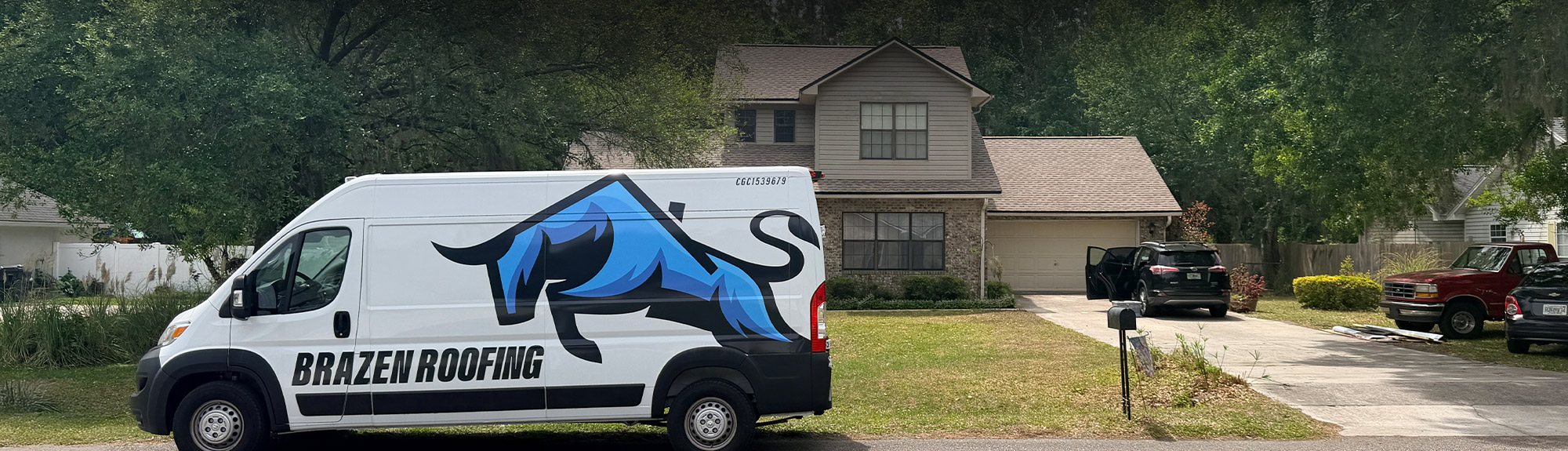
Coastal Storm Repair
Looking for storm damage repair Savannah homeowners can rely on? Savannah’s coastal location means salt air, humidity, and tropical storm season all take a toll on a roof. As a result, that toll happens faster here than it does inland. Coastal storm damage shows up in specific ways here. For example, wind-lifted shingles, water intrusion, and corrosion that weakens flashing and fasteners over time.
What We Look For After a Storm
After a storm, we inspect for both obvious damage and the less visible kind. That includes soft spots in the decking, compromised seals, and granule loss that signals a vulnerable shingle roof. We also check chimneys, vents, and skylights, since these are common entry points for water after high winds. Finally, we document everything for insurance and prioritize emergency repairs to stop active leaks first.
Built for Savannah’s Historic and Coastal Homes
Savannah’s historic districts and coastal neighborhoods each come with their own roofing quirks. For instance, downtown homes often have steep, ornate rooflines. Meanwhile, newer construction near the marsh tends to have lower slopes and different drainage needs. Because of these differences, our crews take a tailored approach. We match materials and technique to the house in front of us, instead of using a one-size-fits-all fix.
Local Experience You Can Count On
We’ve repaired roofs across Savannah after tropical storms and hurricanes alike. In fact, we build every repair to hold up against the next one, not just patch what broke this time. So, for a full walkthrough of what your claim will need, see our Insurance Guide.
- Emergency repairs to stop active leaks after a storm
- Full inspection for wind, water, and salt-air corrosion damage
- Insurance-ready documentation for storm damage claims
- Repair techniques matched to Savannah’s historic and coastal home styles
Storm damage repair Savannah homeowners can count on starts with a free inspection. Contact Brazen Roofing for an emergency inspection. This is part of our full Storm Restoration services. Savannah property owners can also count on our Residential Roofing and Commercial Roofing services year-round. You can browse our Savannah project gallery for examples of completed work.
Coastal Damage Is Cumulative, Not Catastrophic
This is the thing to understand about Savannah roofs, and it changes how you should handle them.
Direct hurricane landfalls on the Georgia coast are relatively rare. Consequential wind and multi-day rain events are not. So the damage here arrives in installments, each storm breaks a few more shingle seal strips, lifts a little more edge metal, works another flashing loose. Roofs on this coast rarely fail in one event. They fail in the fourth, by which point the connection to any single storm is difficult to document.
That has two consequences. Practically, it means the roof is quietly getting weaker while looking fine from the street. For a claim, it means attribution gets harder with every season you wait, an adjuster looking at an accumulated condition is entitled to call it wear.
Salt Attacks the Metal, Not the Shingles
The corrosion problem is specific and it is worth being precise about, because it determines what a coastal roof should be built from.
Salt air does very little to asphalt. What it degrades is everything holding the roof on: nails and fasteners, step and counter flashing, valley metal, vent collars, drip edge and gutter hardware. So a coastal roof frequently reaches a point where the shingles still look serviceable and the connections do not, which is exactly the condition wind exploits.
It is why corrosion-appropriate fasteners and flashing metal are the specification on Savannah roofs rather than an upgrade: and one of the easiest things for a cheaper bid to skip invisibly. On the islands and anything east of downtown, ask specifically what metal is being used.
What Wind Actually Does
- Breaks seal strips without moving the shingle. The consequential one. The roof looks untouched and those shingles come off in the next storm. Found by hand, on the roof, not from the driveway.
- Creases shingle mats: a permanent failure line even where the shingle still lies flat.
- Lifts edge metal and ridge cap, where wind failures start and where they hide.
- Drives rain sideways past details that handle vertical rain perfectly well, which is why sealed starter courses and proper valley construction matter more here than inland.
- Damages soft metals: gutters, downspouts, vent caps and condenser fins, which are often the clearest evidence a storm actually struck your address.
After a Storm
- Stay off the roof. Wet storm-damaged roofing is dangerous, and walking it can turn a repairable roof into a larger claim.
- Photograph everything from the ground and inside, including the attic. Time-stamped photos are evidence.
- Look at the soft metals: they tell you a storm hit your address when the roof itself is ambiguous.
- Get temporary protection on any active leak before worrying about the permanent repair.
- Have it assessed within weeks, not months. Documentation gathered early carries far more weight, and on this coast the accumulation problem makes late assessment substantially weaker.
- Do not sign anything a door-knocker hands you, particularly not an assignment of benefits or a contract with no price.
Verify Whoever You Hire
After a named storm, out-of-town crews arrive quickly and leave before any workmanship warranty means anything. Georgia licenses residential and general contractors at state level, so verify the license with the state rather than accepting a photocopy. Ask separately for a certificate of general liability insurance sent directly from the insurer, and confirm workers’ compensation is current, an uninsured injury on your roof can become your exposure.
Never pay a large deposit before work starts, never sign a contract with no price on it, and treat an offer to cover your deductible as a warning rather than a bargain.
Preventing the Next One
The work that holds up on this coast is not exotic: the enhanced nailing pattern, sealed starter courses at eaves and rakes, properly fastened edge metal, replaced rather than reused flashing, corrosion-appropriate metal, and new pipe boots.
Read hurricane preparation tips before the season and how to check for roof damage after a hurricane afterward. An annual pre-season inspection through our roof maintenance program gives you a documented before-condition, which is worth a great deal the next time you file. If the roof has reached the end of its life, see residential roof replacement and financing.
More about us in the Coastal Empire on our Savannah roofing page and our service area. See the broader storm restoration service, or start with a free roof inspection.
Frequently Asked Questions
Yes, and on this coast more than most places. Wind can break a shingle’s seal strip without moving the shingle, so the roof looks untouched while being materially weaker. Damage here accumulates across storms rather than arriving all at once.
Not the shingles so much as the metal holding them on. Salt degrades fasteners, flashings, valley metal, vent collars and drip edge, so a coastal roof often reaches a point where the shingles look serviceable and the connections do not, which is exactly the condition wind exploits.
Within weeks, not months. Documentation gathered early carries far more weight, and because coastal damage accumulates across several storms, a late assessment gives an adjuster every reason to attribute the condition to wear rather than to a covered event.
Usually not the roof: the soft metals. Dented gutters, downspouts, vent caps and air conditioning condenser fins are what adjusters look at first, and they corroborate roof damage that is otherwise hard to see from the ground.
Be careful. Georgia licenses residential and general contractors at state level, so verify the license with the state rather than accepting a photocopy, get the certificate of insurance direct from the insurer, and confirm workers’ compensation is current. Never pay a large deposit or sign a contract with no price.
The enhanced nailing pattern, sealed starter courses at eaves and rakes, properly fastened edge metal, flashing replaced rather than reused, and corrosion-appropriate fasteners and flashing metal. All of those are specification decisions made before the roof goes on.