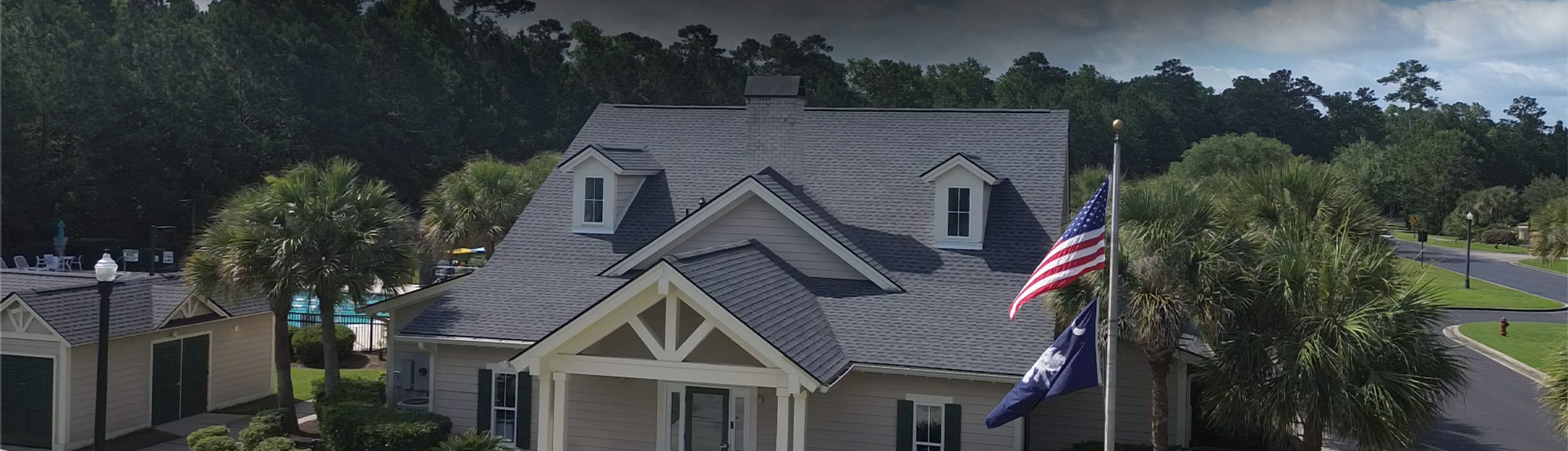
Shingle Roofing
Shingle roofing remains one of the most common and versatile options for commercial properties with sloped roof designs. Available in a wide variety of colors and styles, shingles combine an attractive appearance with reliable protection at a cost-effective price point.
Modern asphalt shingles are engineered for durability, offering resistance to wind, rain, and UV exposure. When properly installed and maintained, commercial shingle roofs can deliver years of performance while enhancing curb appeal and value.
If you’re interested in a commercial shingle roof that balances affordability, durability, and style, contact us today to learn more about the options available for your property.
Shingle roofing is one of several options in our Commercial Roofing Systems lineup, part of our full Commercial Roofing line.
Which Commercial Buildings Get Shingles
Shingles belong on sloped commercial roofs, and there are more of those than people assume. The buildings where we specify them most often:
- Multifamily and apartment communities. The largest category by far. Dozens of sloped roofs, mansards and dormers, and a shingle system that any qualified crew can maintain for the next twenty years. See multifamily and HOA roofing.
- HOA-governed townhome and condo communities. Where matching an approved color and profile across the whole community is part of the specification, not an afterthought.
- Hotels and hospitality with sloped roof sections, where appearance from the ground genuinely matters.
- Offices, churches, schools and municipal buildings built residential in form.
- Sloped sections on otherwise flat buildings. Mansards, entry canopies, porte-cocheres and screen walls that a single-ply crew will not detail as well as a shingle crew.
Commercial Shingle Work Is Not Residential Work at Scale
This is the part that separates contractors on these jobs, and it has almost nothing to do with the shingle.
- Occupied buildings, every day. Residents are home, cars are parked underneath, children and pets are outside. Staging, protection and daily nail sweeps are the job.
- Notice and sequencing. Which buildings, which days, where to move vehicles. Communicated in advance and then actually followed.
- Phasing across many buildings. Weather delays cascade. A twenty-building community roofed one building at a time needs a schedule that survives a wet week.
- Consistency of appearance. Dye lots vary. Material for a whole community should be ordered together, not building by building over three months.
- Documentation per building. Boards, associations and property managers need a record per address, not one invoice for the whole site.
- Cleanup, every single evening. On an occupied residential site this is the thing you will be judged on.
Getting the Specification Right
The parts of the roof that decide its life are the ones nobody sees:
- Architectural shingles rather than three-tab. Higher wind ratings, longer life, better economics per year of service. See architectural and designer shingles.
- Nail placement and count. The most common defect in the industry and the most common reason a manufacturer denies a warranty claim. Enhanced nailing patterns are a condition of higher wind ratings, not an upgrade.
- Matched starter strip and ridge cap. Manufacturer-matched accessories are usually required for the full warranty. Cut-up three-tab used as starter is not the same thing.
- Synthetic underlayment, with ice-and-water membrane in valleys and at eaves where warranted.
- Balanced ventilation. Exhaust without soffit intake bakes shingles from underneath and shortens the rated life regardless of what you bought. On multifamily buildings, blocked intake is extremely common. See why proper roof ventilation matters.
- Flashing at every wall, chimney and valley. Replaced, not reused.
Rating for Your Market
- Coastal South Carolina and Georgia: Myrtle Beach, Charleston, Savannah. Wind rating governs. Most architectural shingles reach 130 mph only when installed to the enhanced nailing pattern, and the sealed starter course at eaves and rakes matters as much as the field shingle.
- Denver, Parker and Oklahoma City: hail governs. Class 4 impact-rated shingles are worth pricing, and many carriers discount for them. On a large multifamily portfolio that discount is a material number.
- Jacksonville: sun, heat and hurricane season together. Ventilation matters more here than almost anywhere.
- Raleigh and Springfield: mixed exposure with real freeze-thaw cycling.
Warranty and Documentation
Two separate warranties: the manufacturer covers the product, we cover the workmanship. Manufacturer coverage is conditional on correct installation (nail placement, matched accessories and adequate ventilation) and it has to be registered. On a multi-building project, get registration confirmed per building. Our overview of GAF roofing warranties explains the tiers.
We are a GAF-certified contractor. Every roof is signed off by a Brazen quality-control inspector rather than by the crew that installed it, which on a twenty-building community means twenty inspections, not one.
Shingle roofing is one of several options in our Commercial Roofing Systems lineup, part of our full Commercial Roofing line. For sloped metal alternatives see commercial metal roofing systems, and for the flat sections of your building see TPO and EPDM. Ongoing care is covered by our preventative maintenance program, and repairs by commercial repairs.
Frequently Asked Questions
Yes, on sloped roofs: and that covers a lot of commercial property. Multifamily communities, HOA townhomes, hotels, churches, schools and offices built in residential form are all routinely shingled, as are the sloped sections of otherwise flat buildings.
Around 20 years for architectural shingles in typical service. Ventilation, nail placement and matched accessories affect that more than the brand does, a poorly ventilated shingle roof can lose a third of its rated life without any storm involved.
By phasing it building by building with advance notice, protecting vehicles and landscaping, sweeping for nails every evening, and documenting each building separately for the association or property manager. On occupied sites the logistics are the job; the roofing is the easy part.
Architectural, in nearly every case. Higher wind ratings, longer service life and a lower cost per year of service. Three-tab is generally reserved for detached structures or budget-driven repairs.
They will if the material is ordered together. Shingle dye lots vary between production runs, so buying for a whole community at once rather than building by building over several months is what prevents a patchwork appearance.
Many carriers discount for Class 4 impact-rated shingles, particularly in hail-prone markets like Denver, Parker and Oklahoma City. Across a portfolio that can be a significant number, so it is worth asking your carrier before the roofs are specified rather than after.