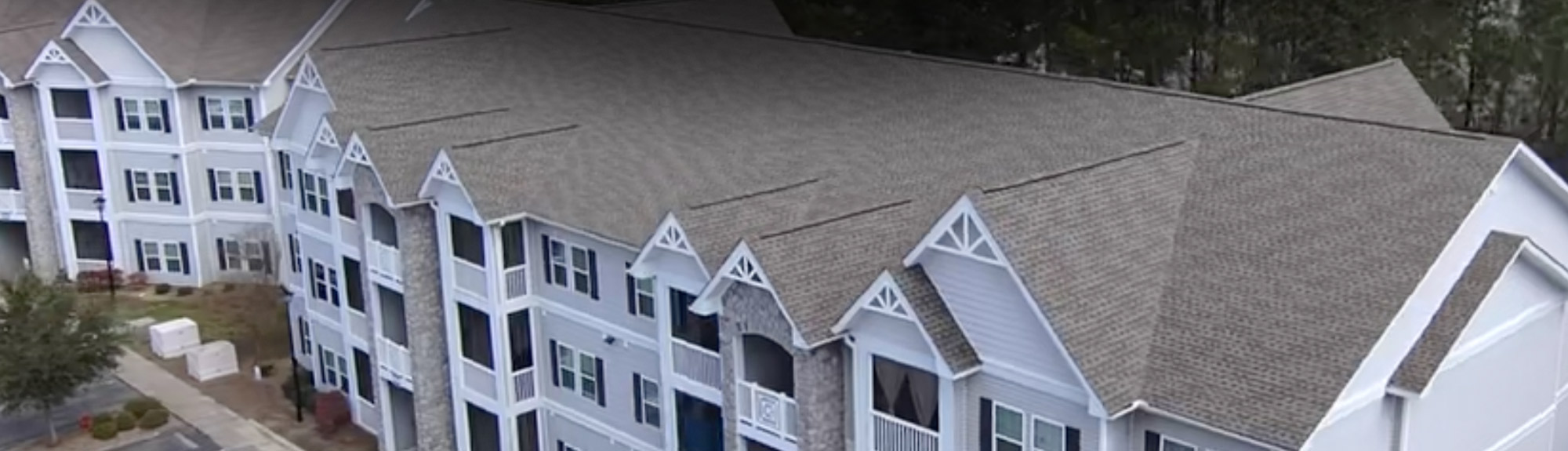
Multi-Family & HOA Roofing
Roofing a condo complex, HOA community, or multi-family property is a different job than a single-family roof — more units, more stakeholders, and a lot less room for disruption. Our multi-family HOA roofing service is built around minimizing downtime while getting every building back under a solid roof.
We work directly with property managers, HOA boards, and ownership groups to plan the job in phases when needed, keep residents informed, and stay on schedule across every building in the community. That means clear communication, accurate bids for the whole property, and a crew that shows up when we say we will.
Whether it’s a full re-roof across multiple buildings or a targeted commercial repair on a handful of units, we handle the logistics so your board doesn’t have to. Many communities also enroll in our preventative maintenance program once the new roof is in, to protect that investment for the long term.
- Phased scheduling that keeps disruption to residents to a minimum
- Single point of contact for property managers and HOA boards
- Consistent materials and workmanship across every building in the community
We manage multi-family and HOA roofing projects across our full commercial service area, including Myrtle Beach, Charleston, Savannah, Raleigh and Jacksonville on the coast, and Denver, Oklahoma City, Springfield, Wichita, Columbus, Milwaukee and Knoxville inland.
Managing roofing for a multi-family or HOA property? Contact Brazen Roofing for a community-wide estimate.
Why These Projects Go Wrong
Multi-family roofing rarely fails on the roofing. It fails on the parts nobody put in the bid.
- Dye lot mismatch across buildings. Shingle color varies between production runs. Order building by building over three months and the community ends up visibly patchworked — a permanent, unfixable outcome the board will hear about for years. Material for the whole property should be ordered together.
- Scope written from one building. Communities are rarely identical. Different pitches, different penetration counts, buildings re-roofed at different times. A bid based on walking one roof produces change orders on the other nineteen.
- No plan for resident vehicles. The single most common source of complaints. Tear-off happens above parking, and towing someone’s car is not a plan.
- Weather cascade. A twenty-building phased schedule that assumes no rain will slip, and every slip compounds across the remaining phases. The schedule has to be built with slack in it.
- Documentation as one invoice. Boards and managers need a record per address — per-building scope, photos, completion and warranty. One lump invoice for the whole property is useless at the next board meeting or the next sale.
- Ventilation ignored across the community. Blocked or insufficient soffit intake is extremely common in multi-family construction, and it shortens every roof you are about to install. See why proper roof ventilation matters.
Working With a Board vs. a Single Owner
An HOA board is not a slower version of a building owner. It is a different decision process, and pretending otherwise is how projects stall.
- Decisions happen at meetings. A question that takes a single owner an afternoon can take a board a month. We front-load the questions rather than discovering them mid-project.
- Boards need material they can present. A written scope with photographs, a phasing plan and a clear cost breakdown that a volunteer board member can explain to residents who did not attend the meeting.
- Reserve studies and special assessments. Whether the work comes from reserves or an assessment changes the timeline, and sometimes the scope. We would rather know which at the bid stage.
- Board turnover. A multi-phase project can outlast the board that approved it, which is another reason for thorough written documentation rather than verbal understandings.
- Residents will call the board, not us. So they get advance notice in writing — which buildings, which days, where to move vehicles — and we then actually follow it.
Phasing an Occupied Community
This is the craft, and it is logistics rather than roofing. People are home, children and pets are outside, cars are parked under the work.
- Building-by-building sequencing, with advance written notice per building.
- Nothing open overnight. We tear off only what can be made watertight the same day, and the forecast drives the daily plan.
- Vehicle and landscaping protection agreed before mobilization, including where residents park instead.
- Nail sweeps every evening, not at the end of the project. On an occupied residential site this is what you will be judged on, and it is the complaint that reaches the board fastest.
- Debris and dumpster placement planned so it does not block access or sit outside someone’s window for six weeks.
- Quiet-hours discipline. Tear-off is loud, and start times matter to people who work nights.
- A single point of contact for the manager or board, so nobody is chasing a crew lead for answers.
Pitched, Flat, or Both
Most communities are both, and the two need different systems.
- Sloped roofs, mansards and dormers — architectural shingles for most communities. See commercial shingle roofing and architectural and designer shingles. Class 4 impact-rated shingles are worth pricing in Denver, Parker and Oklahoma City, where a portfolio-wide insurance discount can be a significant number.
- Flat sections, breezeways and stairwell roofs — a membrane, not shingles. TPO or EPDM depending on climate, and the transition where a flat section meets a pitched roof is where these leak.
- Standing seam and PBR metal for entry canopies, porte-cocheres and screen walls. See commercial metal roofing systems.
- Clubhouse, mail kiosks, garages and maintenance buildings — small, easy to leave out of a scope, and irritating to come back for.
The full lineup is on our commercial roofing systems page.
Insurance-Funded Community Roofs
After a hail or wind event a whole community is usually claimed at once, and documentation across every building is what the claim turns on. Get it assessed early — roofs documented in the first week settle very differently from roofs documented in the third month — and get it documented per address rather than as one property-wide summary.
Two policy clauses come up repeatedly on association policies: separate wind-and-hail deductibles calculated as a percentage of insured value rather than a flat figure, and cosmetic damage exclusions. Both can significantly change what the association actually receives. We document what we find and provide the written record; we do not adjust claims and we will not interpret the policy. Start at storm restoration and see how to check for roof damage after a hurricane.
After the Community Is Re-Roofed
Many communities enroll in our preventative maintenance program once the new roof is in, to protect that investment for the long term. On multi-family property it does two things a single-owner building does not need as badly: it produces per-building documentation the board can hand to the next board, and it keeps warranty conditions satisfied across every address rather than just the ones someone remembered to inspect.
Whether it is a full re-roof across multiple buildings or a targeted commercial repair on a handful of units, we handle the logistics so your board does not have to. See commercial roof replacement, our installation process, examples in our commercial roof work, and the full Commercial Roofing line. We work across all twelve markets — see our service area.
Frequently Asked Questions
They will if the material for the whole property is ordered together. Shingle color varies between production runs, so buying building by building over several months produces a visibly patchworked community — and that outcome is permanent. It is the detail most worth insisting on in the contract.
Building by building with advance written notice, vehicle and landscaping protection agreed before mobilization, nothing left open overnight, and nail sweeps every evening rather than at the end. The roofing is the straightforward part; the logistics are the job.
Yes, and we plan around how boards actually decide. That means front-loading questions rather than discovering them mid-project, providing a written scope with photographs and a phasing plan a board member can present to residents, and giving the manager a single point of contact.
Usually, and it is common where the work comes from reserves rather than a special assessment. Phasing across years does raise the dye lot question, so if buildings must match visually we would rather order material for the whole community up front even if installation is staged.
Per address — per-building scope, photographs, completion record and registered warranty — rather than one invoice for the whole property. Boards turn over, and a multi-phase project can outlast the board that approved it, so the written record is what carries forward.
The community is usually claimed at once, and documentation per address is what the claim turns on. Get it assessed in the first week rather than months later. Also check two clauses on the association policy: whether the wind-and-hail deductible is a percentage of insured value, and whether there is a cosmetic damage exclusion.