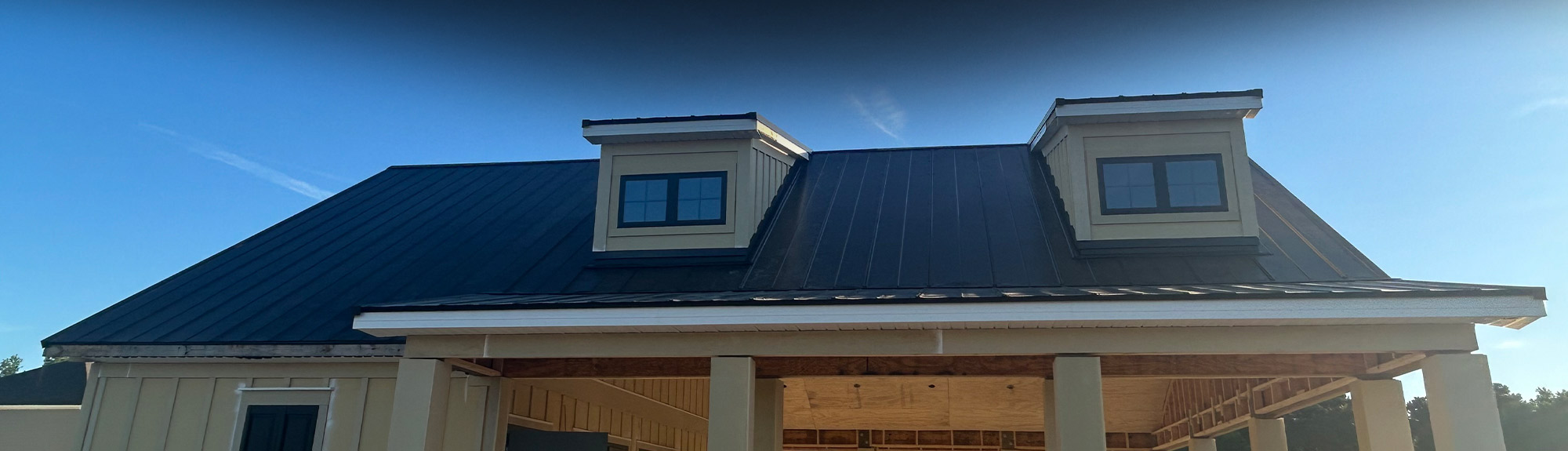
New Construction
When your project starts from the ground up, you need a roofing partner who can handle the pressure, meet the deadlines, and deliver exceptional results the first time around. That’s where Brazen Roofing makes the difference.
We work side-by-side with general contractors, developers, and construction teams to install high-performance roofing systems for new commercial builds. Whether you’re developing a retail center, industrial facility, office complex, or multifamily housing, our crews know how to move with the pace of your project.
From pre-construction planning to final inspection, we bring the expertise and professionalism your build demands. We collaborate seamlessly with other trades, stay ahead of your timeline, and focus on long-term quality, not quick fixes.
At Brazen Roofing, we know every new construction is built differently. That’s why every system we install is tailored to your structure, your schedule, and your long-term performance goals. Our team is highly trained, safety-certified, and ready to handle jobs of any scale with confidence and grit.
Builders choose Brazen because we show up, we follow through, and we make their lives easier, not harder.
Ready to break ground? Reach out today and let’s get your commercial roofing project moving!
See examples of our completed commercial projects. This service is part of our full Commercial Roofing line.
Where We Fit in Your Schedule
On new construction the roof is rarely the hard part. The sequence is. A roofing subcontractor who cannot hit a dry-in date holds up every trade behind them, and everyone on the job knows which sub that was.
- Pre-construction and submittals. Shop drawings, product data, warranty documentation and any deferred-submittal items handled early rather than the week they are needed.
- Deck acceptance. We inspect and accept the deck before we load it. Fastener pull-out values, deck condition and slope get verified against the drawings, not assumed from them.
- Dry-in on schedule. The date that matters to the general contractor. Getting the building weathertight is what lets interior trades start.
- Coordination with the other trades. Mechanical curbs, electrical penetrations, plumbing vents, lightning protection, solar mounts. Every one of those is a future leak if it is flashed by someone who does not do roofing.
- Punch and closeout. Warranty registration, as-builts and the maintenance documentation the owner needs on day one rather than six months later.
Getting the Roof Right at the Design Stage
The cheapest time to fix a commercial roof is before it exists. When we are brought in early, and we would rather be, these are the things we push on:
- Slope and drainage. More flat roofs fail from ponding than from membrane defects. Tapered insulation, crickets behind curbs, and enough drains in the right places, sized for local rainfall rather than a generic figure.
- Membrane selection matched to the building’s use. A restaurant tenant means grease exhaust, which means PVC rather than TPO. Getting this wrong at design costs the owner a membrane in eight years.
- Perimeter and corner attachment. Wind uplift concentrates at edges and corners, and that is where wind failures start. Enhanced perimeter attachment and properly engineered edge metal are not upgrades.
- Insulation and code compliance. Current energy code often requires more R-value than a designer assumed, and that changes assembly height, curb heights, door thresholds and every tie-in.
- Rooftop equipment layout. Curbs set too close together or too close to a parapet make a roof impossible to flash properly and impossible to service later.
- Access and walkways. If the roof will be serviced monthly, plan the walkpad routes now instead of watching the membrane wear through in year three.
Building Types We Work On
- Retail centers and single-tenant retail
- Industrial and manufacturing facilities
- Warehouse and distribution
- Office and medical office
- Multifamily and student housing, see multifamily and HOA roofing
- Hospitality
- Institutional and municipal work
We install TPO, PVC, EPDM, modified bitumen, standing seam and PBR metal and commercial shingle systems. The full lineup is on our commercial roofing systems page. We also handle residential new construction for builders and developers.
Where We Build
New construction roofing across all eleven of our markets: Myrtle Beach and Charleston in South Carolina, Savannah, Raleigh, Jacksonville, Denver and Parker, Oklahoma City, Springfield, Milwaukee, Columbus, Wichita and Knoxville. Full list on our service area page.
Brazen Roofing has completed more than 4,387 roofs since 2021, currently running around 750 to 800 a year. Our installation crews are subcontracted, which is normal at that volume across twelve markets: our quality-control inspectors are Brazen staff, and the sign-off comes from them rather than from the crew that did the work. On a new build that inspection happens before the roof is covered by anything else, which is the only time it is worth anything.
After Turnover
A new roof with no maintenance history is a warranty claim waiting to be denied. Most manufacturer coverage requires documented inspection, and the owner usually finds that out during the first leak. We register the warranty, hand over the documentation, and can carry the building on our preventative maintenance program from day one. Read how often a commercial roof should be inspected.
See examples of our completed commercial projects in our commercial roof work. This service is part of our full Commercial Roofing line, and our installation process is documented in detail.
Frequently Asked Questions
Yes, that is most of our new construction work. We coordinate with the GC on submittals, dry-in dates, staging and trade sequencing, and we handle deferred submittals early rather than the week they hold up an inspection.
At design if possible. Slope and drainage, membrane selection matched to the building use, perimeter attachment, insulation depth and rooftop equipment layout are all far cheaper to get right on paper than on the roof, and some of them cannot be corrected later at any price.
The building decides. TPO is the default for new low-slope construction because of its reflectivity and welded seams. PVC is correct where there is grease or chemical exhaust. EPDM suits cold climates and easy repairability. Sloped and semi-sloped sections usually get standing seam or PBR metal.
That is the date we schedule around, because every trade behind us depends on it. Deck acceptance, material delivery and crew allocation are all planned against dry-in rather than against final completion.
We do, and it matters. Curbs, vents, conduit and equipment mounts flashed by a trade that does not do roofing are the most reliable source of leaks on a brand-new building. Coordinate them through us.
Yes: registered manufacturer warranty, workmanship coverage, as-builts and the maintenance requirements the owner needs from day one. Unregistered coverage is the most common avoidable loss in commercial roofing.