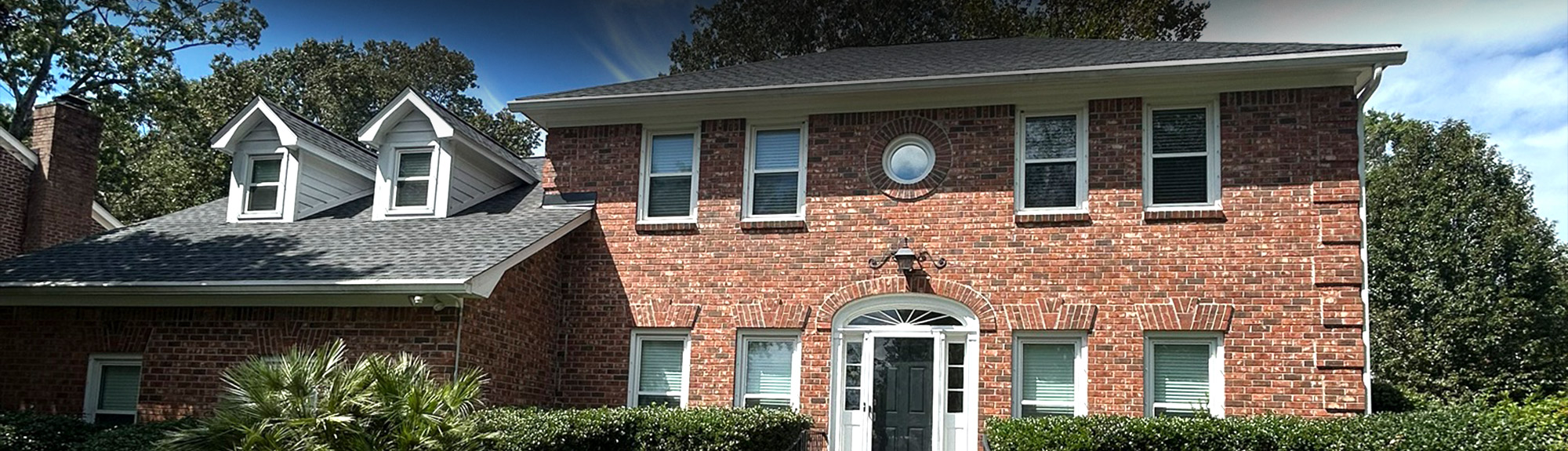
Residential Shingle Replacement
Charleston’s historic homes and coastal climate both put real demands on a roof. Shingle roof replacement is one of the most common ways we help homeowners here get ahead of leaks, curling, and storm damage. It means removing worn or damaged shingles down to the decking and installing a new system built for Charleston’s heat, humidity, and salt air.
We inspect the decking and flashing before any new shingles go on. A new roof over a bad deck just hides the problem instead of fixing it. From there, we walk you through shingle options that balance curb appeal with performance. That’s an especially important call in neighborhoods with historic character.
Whether you’re in a downtown historic district or a newer neighborhood outside the peninsula, we’ve got you covered. We’ve replaced shingle roofs across Charleston long enough to know what holds up here and what doesn’t.
- Free inspection and shingle replacement estimate
- Decking and flashing checked before any new shingles go on
- Shingle options suited to Charleston’s climate and historic character
Ready to replace your shingle roof? Contact Brazen Roofing for a free Charleston estimate. This is part of our full Residential Roofing service line. Homeowners with older or historic homes may also want to see our Historic Roof Preservation services. You can also browse our Charleston project gallery.
Why Charleston Roofs Wear Out Faster
The Lowcountry is a hard climate for asphalt, and it works on a roof from several directions at once.
- Heat and humidity. Shingles rely on oils to stay flexible, and sustained heat drives them out. A stiff shingle cracks and curls instead of flexing, and curling at the edges is usually the first thing homeowners notice.
- Attic temperature. An under-ventilated Charleston attic cooks the shingles from underneath. It is the single largest reason two identical roofs on the same street can be years apart in condition.
- Salt air. On the peninsula, Sullivan’s Island, Isle of Palms, Folly Beach, James Island and Mount Pleasant, salt attacks the metal rather than the asphalt. Fasteners, flashings, vent collars and drip edge corrode long before the field shingles look worn, and the metal is what holds the roof on.
- Wind-driven rain. The coastal failure mode people underestimate. Water pushed sideways defeats details that handle vertical rain perfectly well, which is why sealed starter courses and proper valley construction matter more here than inland.
- Algae streaking. The black streaks on north-facing planes are algae, not damage. Algae-resistant shingles are worth specifying.
- Live oaks and shade. Slower drying, debris damming valleys, and limbs abrading shingles in every storm.
The Decking Comes First
We inspect the decking and flashing before any new shingles go on, and on Charleston houses that is not a formality. A new roof over a bad deck just hides the problem instead of fixing it: and worse, compromised sheathing will not hold a nail properly, which quietly undoes the wind rating you are paying for.
What we find here regularly: soft or delaminated sheathing from humidity plus a slow flashing leak, plank decking with wide gaps on older peninsula homes, and previous overlays concealing whatever is beneath them. Any of those changes the scope, so we photograph and price deck repair as we find it, before anything covers it back up.
What We Specify on a Charleston Shingle Roof
- Architectural shingles installed to the enhanced nailing pattern. Most reach their rated wind speed only with that pattern, it is a condition of the rating, not an upgrade. See architectural and designer shingles.
- Sealed starter strip at eaves and rakes. On a coastal roof this matters as much as the field shingle. It is where wind gets underneath.
- Algae-resistant shingles, because streaking here is a question of when.
- Synthetic underlayment, with ice-and-water membrane in valleys and at eaves where warranted.
- Corrosion-appropriate fasteners and flashing metal. Near salt water this is the specification that decides how long the roof stays attached, and it is the easiest thing for a cheaper bid to skip invisibly.
- New flashing at every wall, chimney, skylight and valley: replaced, not reused. Plus kickout flashing where a roof plane meets a wall.
- New pipe boots, not the old ones with fresh sealant on them.
- Balanced ventilation: exhaust matched by soffit intake, corrected while access is open. See why proper roof ventilation matters and roof ventilation in South Carolina.
Historic District Work
If your home is a contributing structure in one of Charleston’s historic districts, exterior work may require review by the relevant board, and material, color and profile can all be part of it. Establish what is required before material is ordered rather than after it arrives, that sequence saves weeks.
Practical constraints on older peninsula homes tend to repeat: plank decking, complex geometry with multiple valleys and dormers, tight access on narrow lots and single-lane streets with no staging room, chimneys needing proper counterflashing rather than sealant, and porch or piazza roofs that are low-slope sections requiring a membrane instead of shingles. The transition where a piazza roof meets the main roof is the most commonly misdiagnosed leak on a house like yours, it stays dry in ordinary rain and leaks in a downpour.
Some historic homes call for slate, tile or standing seam metal rather than shingles. Slate and tile raise a framing question first, and we assess that before pricing anything.
Repair or Replace?
We would rather tell you the roof has five good years left than sell you one you do not need yet.
- Repair when the damage is isolated (a few blown shingles, one bad flashing, a failed pipe boot) on a roof with real service life remaining. See roofing repair.
- Replace when shingles are curling or cracking across multiple planes, granule loss is widespread with asphalt showing, the deck is soft, or the roof is at the end of its service life. See roof replacement.
- Assess first after a storm, because wind can break a shingle’s seal strip without moving the shingle. The roof looks untouched and the shingles come off in the next storm. Start at storm restoration or read how to check for roof damage after a hurricane.
After the Roof Is On
Keep the contract, invoice, registered manufacturer warranty and photo record together. It matters at resale and it is what an insurer asks for after a storm. Unregistered warranty coverage is the most common avoidable loss in residential roofing, and we file it rather than leaving it with you.
Then have it inspected annually and after any named storm. Our roof maintenance program covers that on a schedule with a dated photo report, which gives you a documented before-condition. On the coast that is worth a great deal the next time you file a claim, and read hurricane preparation tips for your roof before June.
More about Brazen in the Lowcountry on our Charleston roofing page. This is part of our full Residential Roofing line, book a free roof inspection, or see financing if timing is the obstacle.
Frequently Asked Questions
Less than the same roof would last inland. Heat drives the oils out of asphalt shingles and an under-ventilated attic cooks them from underneath, so curling and cracking arrive earlier here. Ventilation affects the outcome more than the brand of shingle does.
Not the shingles so much as the metal holding them on. Fasteners, flashings, vent collars and drip edge corrode long before the field shingles look worn, which is why corrosion-appropriate fasteners and flashing metal are the specification near salt water, and one of the easiest things for a cheaper bid to skip invisibly.
Possibly. Exterior work on a contributing structure in a historic district may require review, and material, color and profile can all be part of it. Find out what is required before material is ordered rather than after, that sequence saves weeks.
It gets photographed, priced and shown to you before anything covers it back up. It matters beyond the repair cost: compromised sheathing will not hold a nail properly, which undoes the wind rating you are paying for.
Almost certainly the transition where the low-slope piazza or porch roof meets the main shingle roof. If the membrane does not run far enough up under the shingles, water coming down the steep roof lands on a seam. It stays dry in ordinary rain, which is why it goes undiagnosed for years.
Repair if the damage is isolated and the roof has real service life left: a few blown shingles, one bad flashing, a failed pipe boot. Replace if shingles are curling or cracking across multiple planes, granule loss is widespread, or the deck is soft. After a storm, get it assessed first: wind can break a shingle’s seal without moving it, so a roof that looks fine can be finished.